Getting Ready for Breyerfest C/Y Show Pt. 5

How To Make Breed Cards for Part-breds

Making breed cards for mixed horses is slightly different than regular breeds. Your model is a mix of two, not one, so you need both sides to be represented. 
I’m going to use my Palomino Weather girl as an example. Since she’s palomino, she can’t be a full blooded Arabian horse. So I looked up different half-Arabian crosses, and eventually came to the Arab x Welsh pony cross. 
Since this horse will be a well known mix, I mark the breed card as:

Arab x Welsh Cross

Description: A small pony with Arabian refined features
Height: 11 Hands-15 hands
Color: Any color except Appaloosa

 For crosses that aren’t well known, make sure you have a picture of either a horse of that linage or two pictures of the parent breeds. When using mixes that aren’t nationally recognized , you don’t really need a description, height, color, etc of horse breeds. Crosses are fun because there are so many ideas and mixes that you can use!
Well, that’s the end of the Halter part of Breyerfest (I think), so hopefully the next installment is performance or customs!

Getting Ready For BF C/Y Show PT 4-Typing Up Those Breed Cards

In here   I mentioned that you need to make breed cards for rare breeds, rare colors, or mixes. This is a how-to on how I make breed cards. There are many other ways. Some people cut up their breed books and slide their cuttings into organized sleeves inside a binder. I do not, mostly because of some shows having strict rules on the page sizes and all. It’s just easier for me to type it up than to cut. Plus if I have an electronic copy, I can keep printing them off to my heart’s desire. With a book I only have one copy. Once that one copy is lost or messed up, that’s the end of that breed card.

How To Make Breed Cards

When searching online for breed info there are two roots you can go. You can look at the actual breed website or a list of horse breeds. Or an actual physical breed book can be used. This how-to is for internet, but it could be easily applied to physical books.
The things that you want to include in your breed card are:
  • Conformation
  • Height 
  • Color
  • Uses (if space allows) 
  • Picture (will be shown later, so don’t worry)

For conformation you don’t want all of this, it simply will not fit on a small card. I’ll show you using the Russian Don Horse. Take only the important parts. You want the bare minimum that gets the point across, so no history or vast amounts of description about your horse breed.

The important stuff is highlighted
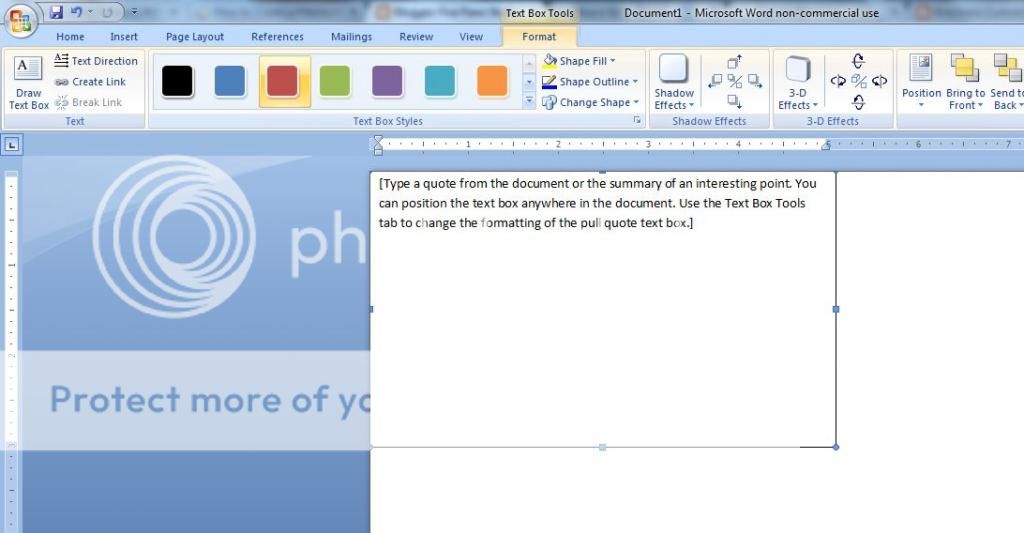
I use Microsoft word, and make a text box.
3 X 5 sized
Then I type in the info

Next it’s time to look for pictures. When I type up the breed in Good images, I get a variety of shapes and sizes. (Howrse is still around? Wow I was one of the ‘first gen’ people when it came out in ’09). Anyways, you want to find a horse that looks like yours but follows the breed description. You don’t want the horse to look completely wrong for the breed you’re trying to portray. 
Copy and paste the picture into the document and re-size it.
I also add the source where I got the breed info from.
Next will be on mixes. 🙂

Getting Ready For Breyerfest C/Y Show Pt. 3-Picking Your Breed

Once you’ve picked out your best halter models, it’s time to look for classes that your models can fit in. Remember though that only one model can be in each class.

Picking Your Breed

To find different breeds I use horse breed books. But there are also numerous websites on breeds that work well too. I think this is a great one–Horse breed website . If you find a breed that is rare or isn’t listed in the breed guide or it’s an unusual color, you’ll have to make a breed card. I’ll discuss on how to make a breed card later in another post.
Breyer models come in many shapes and sizes. For some, numerous breeds can be added to their name. Even though Flash may be pinned by Breyer as a Morgan, you may be able to make him a Quarter Pony. But if you aren’t sure about a breed, you can always be safe and go with what Breyer has made the model.
When deciding on a breed, look at the model and decide what type it is : draft, light, or pony.
Draft horses are the plows of the horse world.

Light horses are the ones that are ridden or used for more ‘light’ work such as riding, light driving, racing or things of that nature.

Ponies are any breed of horse that is shorter than 14.2 hands (a hand is 4 inches).

Once you’ve figured out the conformation type, you’ve narrowed down your list of possible breeds.
Most horse breed sources are categorized into the different breed types.
Light Breeds can be broken down even further. There are: Gaited, Spanish, Stock, and Sport plus light.
Gaited horses are horses that have special gaits other than walk, trot, canter, or gallop. An example would be a Missouri Fox Trotter. Spanish horses are horses than originated in Spanish type countries such as the Andalusian. Stock horses are the Quarter horses/ bulldogs of the world. The other light breeds are breeds like the Arab.

Sport horses can be chopped up into sections of its own. It can be broken down into the Thoroughbred/ Standardbred, Warmbloods, and Carriage breeds (carriage breeds are different from draft). Carriage breeds are the ‘showy’ type of horse bred for harness work, such as the Friesian.
To put that all on one page here it is:

Go through your list and start looking at the pictures of the different horse breeds. Any that your model is close to, make a note. Looks at conformation and color. Both are important.
Out of the all breeds you made a note to, now’s your chance to decide what your model will be. Remember for breed assignments, it comes down to really what your preference. Except for example you can’t have a Clydesdale trying to pass as a Thoroughbred. Breeds that are close in conformation can be interchanged. Really though, pick the one you like best. At the show though, if your model doesn’t place as one breed, you can not enter it into another class as another breed. That’s a no-no.
If a model has the right conformation, but not the right color, you can make the model a mix. Just make sure you also have a breed card to show the two breeds mixing together to make your model.
Model horse breed assignments aren’t a black and white deal. Most models can go for being multiple breeds and do well being so.
Another rule for Breyerfest is that every model that you’re showing must have a identification tag. This identifies your model as yours, plus if you don’t have it your model will be disqualified. Afterwards follow the rules on writing the tag for your model, loop it on securely and you’re done!
If you have any questions comment away!

Getting Ready For The C/Y Show Pt. 2-Picking Showable Models

Oh Where Oh Where Did Those Perfect Models Go?

Once you’ve submitted your entry form and gotten back that you’re in, it’s time to start thinking about which models to enter. For the Breyerfest C/Y show, the models must be Breyer made. So even though you may bring resins, Peter Stones, or even safari plastics on the long trek to Kentucky, none of them may be shown during Breyerfest.
The models that can be shown at Breyerfest are any Breyer made or Breyer customized by entrant made models.  Here’s a link to the class list—Class list. Notice that there are only 2 classes that say specifically entrant customized. In performance you may also show models that were customized by the entrant. Notice the important part–BY THE ENTRANT. Nope, no going to your parents and asking them to make you a model to show in your name. No going on Youtube and commissioning someone to make your model. Only YOU can make the model. Every year there seems to be an incident where a person showed a model that was not made by them even though it’s spelled out in the rules what you can’t and can do. Be fair and follow the rules, ’cause how is it fun to win, when you didn’t follow the rules? I’ll address more about customs later.
When getting your original finish models together, take a close look at them. Breyerfest is a competitive show, so you’ll want to bring the best models that you have. Unless you’re looking to show a model in the most loved class. It doesn’t matter what the model looks like in that class.

Look closely for rubs,

scratches, 

and other obvious defects. Some rubs and scratches can be fixed but try to look for the best first. 
No Padre doesn’t have any defects (he’s purrfect) but the original model was made off of a cartoon. So therefore Padre has the mold of a cartoon. While he does have a slight chance of placing against other models, the likely hood of him placing over more realistic models isn’t that great. That’s the fun thing about models. You can go as realistic as you’d like!

Once you’re done that, you’ve figured out how to pick out a perfect model horse. A how to on picking breeds will be later.