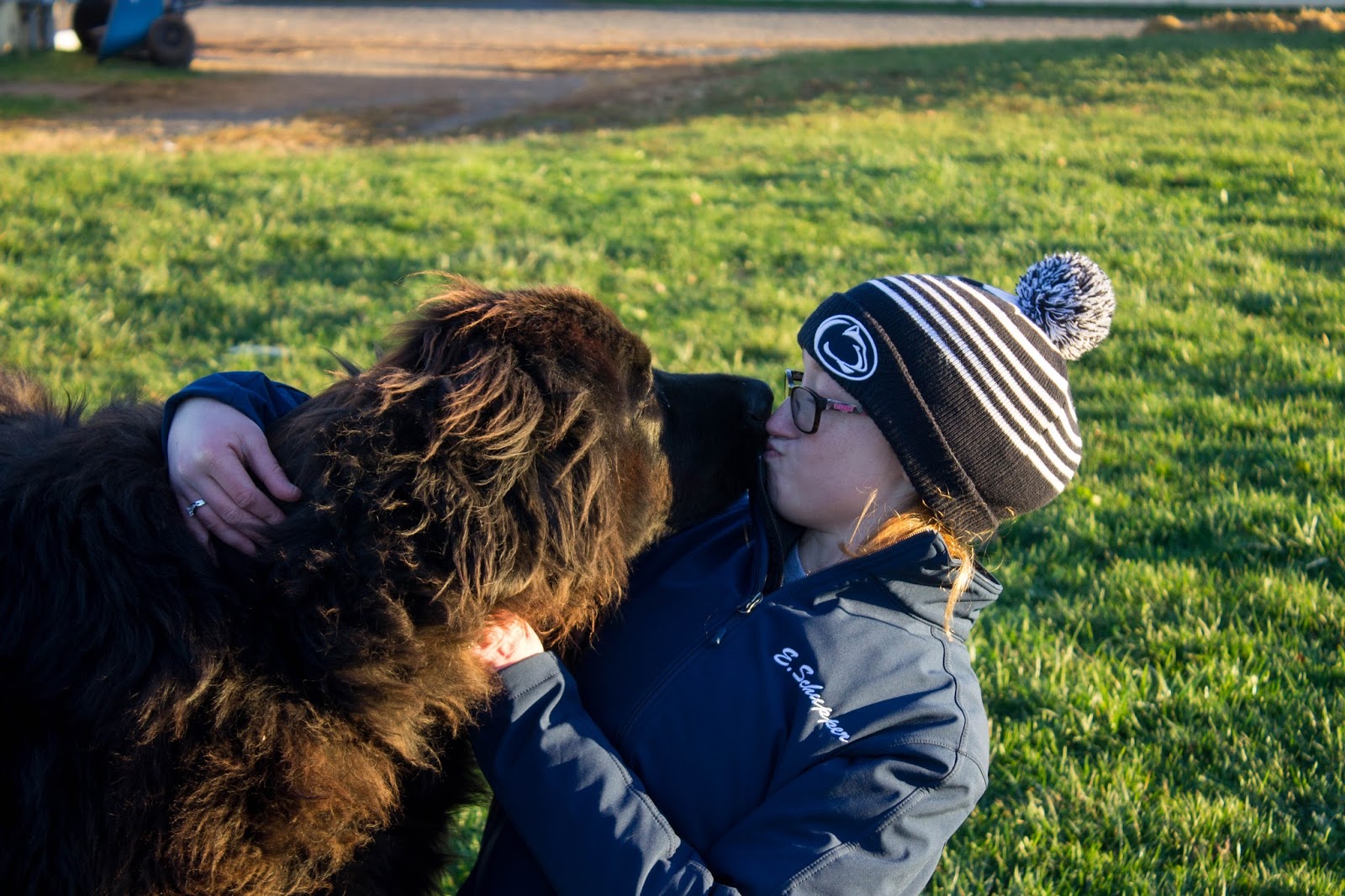
The Frick Museum

In June, I went to The Frick in Pittsburgh, PA. I was in Pittsburgh for a conference with my boss, but coming early meant being able to explore!

The Frick Museum opened to the public in 1990, and was formed around the Frick family’s home. Henry Clay Frick amassed a considerable amount of artwork through his life (and after becoming wealthy) and collected a varied style of prominent artists. The museum also hosts visiting exhibits.
This painting is called Portrait of an Extraordinary Musical Dog by Philip Reinagle. Information about the piece said Reinagle “seemingly appropriated a pose from a portrait of Mozart to depict a spaniel playing a Broadwood square piano.” It was an adorable painting!

 We wandered the grounds and found a soundly sleeping museum cat.

We entered the gift shop which housed some pieces of tack. This is a 20th century bridle. There was a sidesaddle, but the picture didn’t come out great. 
The Car and Carriage Museum ended up being our last stop.
The room was full of interesting carriages 

 and cars.

The carriages were beautiful. 
There were also different riding outfits. This is a circa 1895 Women’s Two-piece Day Suit. Look at the sleeves! The information sheet said:

Dress embellishment in the 1890s decreased as upper-class women chose to use expensive and tragic fabrics to differentiate themselves from the working classes. Women’s clothing moved away from the garish shades of the previous decades towards hues that were soft and subtle, with a preference for pale shades such as grey and mauve……Sleeves moved away from a tighter fit and puffed up to enormous proportions. 

This is an Outing Wagon from circa 1906. It was created for and by wealthy people. Only one horse drove it. The carriage showed less dust and wear from traveling so unrefined wood and tan upholstery was used. 
I loved the reasoning behind this one! This is a Chubb Phaeton, circa 1908. This was often used as a grandstand at polo matches. The carriage would be pulled up to the field and guests have great seats to view the field. There was a hinged dear that would be used as a table. Tail-gaiting before it was a common weekend thing!
This is a Four-Spring Basket Phaeton, circa 1903. This was referred to as a Ladies Wicker and was popular on resorts because of their design. Because of the fringe and light colored upholstery, this was driven primarily by women. 
I loved this circa 1900 Bobsled. Bells adorned the horses’ harness because of sleighs being difficult to stop. It alerted pedestrians of the carriage’s approach.
This carriage was known to be pulled by Morgans. It’s a Brougham from 1895. 
After viewing the rest of the carriages, it was time to look at the cars. Cars aren’t my thing, but the evolution of going from carriage shape to car shaped was interesting. 
This Model A Runabout, circa 1900, looked more carriage than car. Its original cost was $750. The driver driver steered it using a tiller. In the 1900s, few American automobiles had steering wheels. 
Electric vehicles aren’t new. This is a 1903 Electric Stanhope. Some cities had. charging stations installed in business areas so drivers could shop while waiting for their cars to recharge.  The original price was $1600 and it had a top speed of 14 mph and a range of 20-22 miles. 
Here’s a vehicle that resembles our cars today. It’s a Rolls Royce.
This is a Model R Roadster, 1909. It was originally sold for $1350.
All the pieces to make it gooo!
After leaving the museum, we took the Monongahela Inclined Plane. 
We overlooked the city once we stepped off. 
The city on our way down.

 It’d been a nice first day in Pittsburgh!

I Hate Goodbyes

Cato was mine from the time he was two weeks old until his last breath yesterday.
He was born on a friend’s porch and I picked him from the litter. We didn’t stop by the friend’s house to see kittens, but when a stampede of tiny balls of fluff command your attention, you give it. I told my mom I hoped the kitten would keep his blue eyes and talk a lot. Cato was exactly what I wished for.

I didn’t know what to initially name him, but I was in the midst of my Hunger Games phase. And since the series is not only compelling to read but also full of perfect pet names, he became Cato.

His sister became Rue.

When he first came home weeks after picking him, he was small enough to fit in my palm. Also–apparently I was not a photographer 8 years ago. This is as cringeworthy as they get.

Here’s a slightly better kitten picture. His fur went every way no matter how much I brushed it until he was full grown.

At times he was more dog than cat. He knew his name and how to sit and beg. He thought he’d protect the house when people came over by standing guard at the door. Other times he was full cat, setting hard boundaries about the people he wanted to be around.

From a young kitten, I dressed him up and taught him to pose.

Every single one of my furry pets have been subjected to dress up time.

Bullet, who passed away two years ago.

Christmas.

He was my shadow. Often when I was doing anything model horse related he was in the middle of it.

Supervisor.

He traveled a few times to Chincoteague and the Pocono mountains. He assumed he was supposed to tag along whenever suitcases were brought out.

Over the summer he lost weight, but gained it back. Alarms didn’t sound to me.
When I came home from Breyerfest, however, I looked at the litterbox and assumed my sister wasn’t on top of it as much as me. The next morning I realized she’d been doing a great job–he was peeing a lot. Then I noticed the amount of drinking he was doing and took him to the vet. He was diagnosed with diabetes.

His weight kept dropping even with adjusted dosages.
Animals live in the present and when Cato stopped doing the things he enjoyed doing, I realized it was time and it’d only be selfish for me to keep him here. The final gift I could give him was letting him go.
It didn’t make the decision any easier. I expected to not have to think about that decision until I was in my 30s because he was only 7.
The only problem with pets is there’s never enough time with them. He was a good cat and I will miss him.

Bill Pickett Rodeo Pt 2

I didn’t get to ride in the opening ceremony this year. There was a kerfuffle with horses. Since I didn’t get to ride, I had a chance to watch more of the show.

A few cow events happened first.
Fourth generation riders.
Next came bronc riding. 

The horses kept their ears forward as they twisted in the air. For a split second I pondered what those seconds felt like and that I’d like to try it–before coming a conclusion of nope.

I love to watch barrel racing, and this was no exception. It started with adults and then went to juniors. 
The rider below was a junior. I think she was 11 or 12!

I enjoyed watching them.

One of my favorite events of the Bill Pickett Rodeo is the relay race. Each team member races around four barrels before passing the baton to the next member.

The Cowgirls of Color was the first group to go. They’re an all female relay team that is trying to break down barriers and stereotypes.  Here’s a recent spotlight they’ve had on the Today Show.

After the last event, the bucking horses were let out. They galloped around the arena and enjoyed themselves.

The spectators in the seats filtered out of the arena and the loudness of thousands of excited people slid to silence.
But for those that vended, competed, or were involved in some way with the rodeo the party was just starting. Tail gate time!
The stables were located behind the arena. There was enough space for people to park their RVs and make space for grilling.

Line dancing music blared and people danced.

There was a lot of dancing.

I stayed for a bit before driving home. I really enjoyed the rodeo, but even more so enjoyed hanging out with various riding groups from around the arena and country. 

Bill Pickett Rodeo History 2019 Part 1

On Saturday, I drove to Maryland along with two fellow barn mates.
We were all buzzing with excitement because of the reason: The Bill Pickett Rodeo.

The last time I’d attended was two years ago.

We brought two horses from the farm.
Don Jr with his horse, Dolly. 

I borrowed this wonderful paint mare from a Maryland friend(I cannot for the life of me remember what the mare’s name is).

 I rode in the opening ceremony.

It was fantastic. 
I was excited about what this year would bring. This was the Bill Pickett Rodeo’s 35th year. 
I never knew about the rodeo until two years ago. In all of the years I subscribed to the main horse magazines I never saw any mention of it. 
So here’s a bit of history about it. 
Lu Vason attended the Cheyenne Frontier Days in 1977, and noticed the lack of Black cowboys participating. Curiosity captured him. Were people aware of the cultural history of Black cowboys? He did some digging and created an all-Black rodeo called the Bill Pickett Invitation Rodeo. He wanted to break the narrative of Black people not being present in the story of the west. He named the rodeo after Bill Pickett. Bill Pickett is credited with creating the technique of bulldogging. 
Vance said, “People knew the name Will Rogers. But who they hadn’t heard of was Bill Picket and if they had, they didn’t know he was Black.”
He wanted to use the rodeo as a way to educate people, and to create a new business. 
The first Bill Pickett Rodeo was held in 1984 in Denver, Colorado. Today, the rodeo brings in over 130,000 spectators across the United States. Both of the Maryland shows on Saturday were sold out.
In the last two or so years, major non-equestrian publications such as Smithsonian magazineNew York Times and The New Yorker have covered the history of Black western riders and the white washing of the American west. Black Reins was created in 2013 to spotlight the black cowboy and to “shed light and represent the strong tradition of these heroes–both men and women-who have been left out of mainstream media publications…..” They also highlight diverse riders on their Facebook page. 
Vance passed away in 2015. He said, “The Rodeo is education; I’m trying to promote the culture of the Black west. A lot of people can’t relate to the pyramids in Africa. I believe a lot of us can better relate to Black Americans who were a part of developing this country.”