The Making Of Black Mirror

Back in Febuary I had the desire to sculpt. But I didn’t have any idea of what to sculpt so I hacked off a few of the stablemate unicorn horns.  

But then then it hit me. An idea. I’d had a Django body hanging around for a year and imagined him as a Thestral.

Thestrals are skeleton horse like creatures with reptilian features. And a beak.
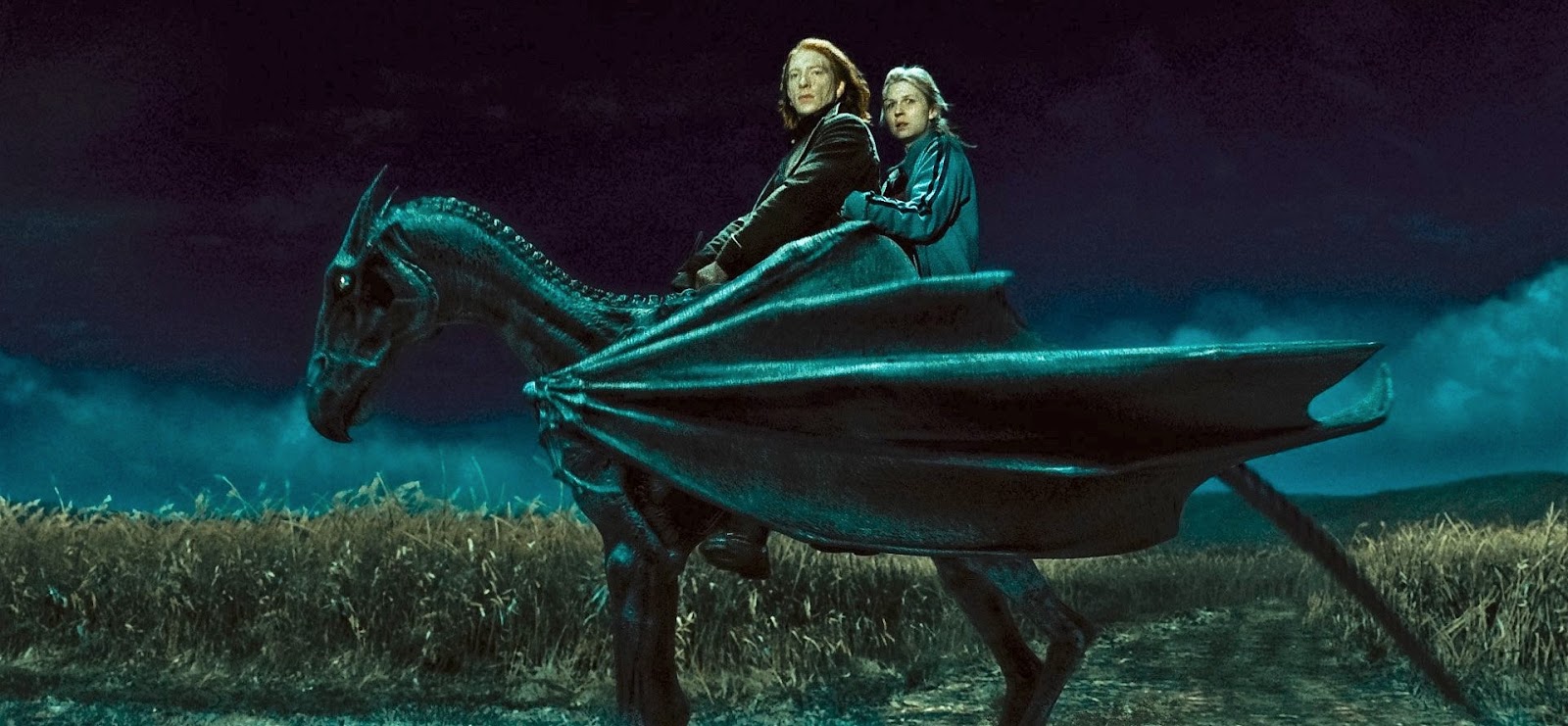
source: harry potter wiki

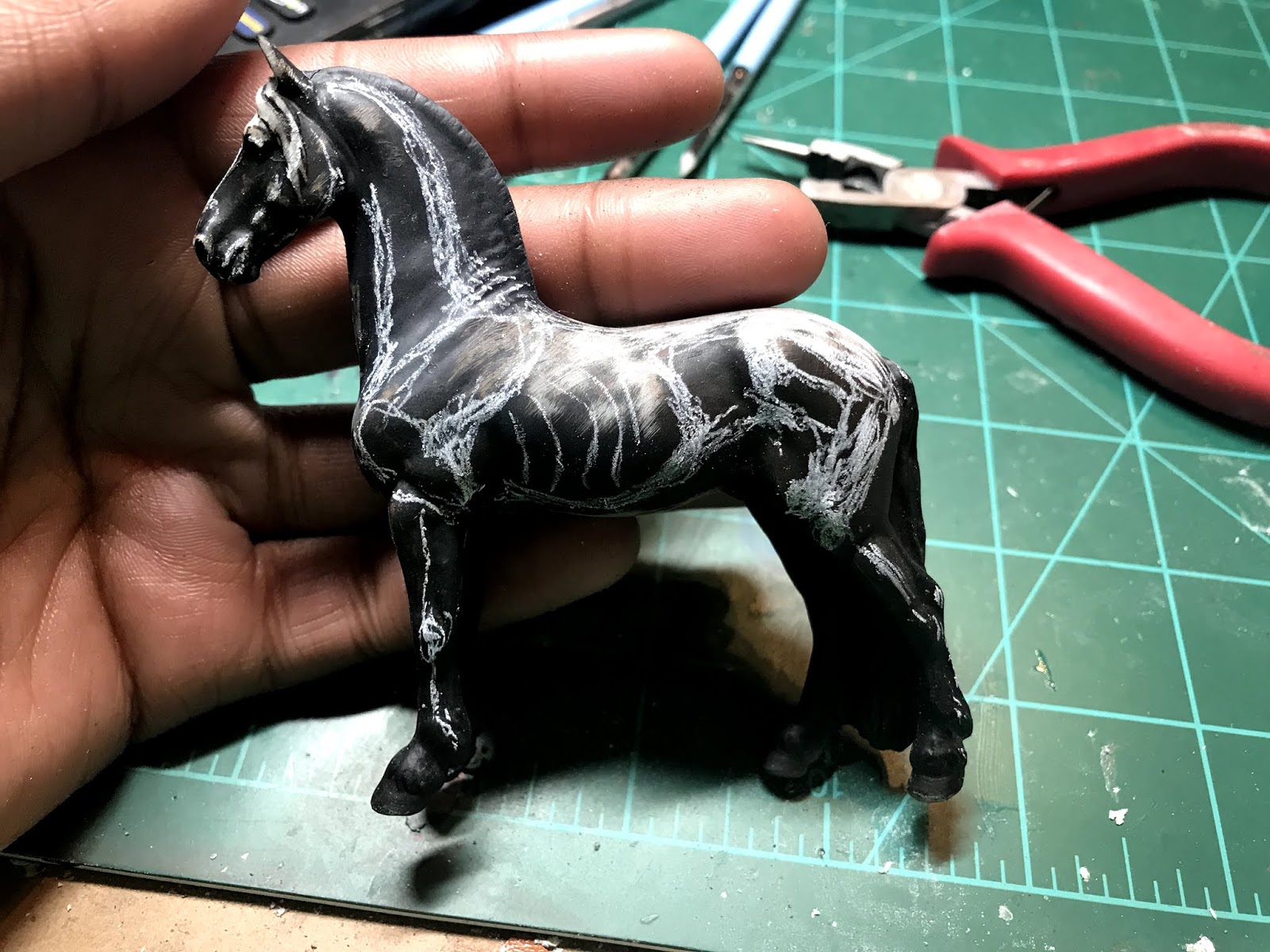
First I drew some guide lines on him.

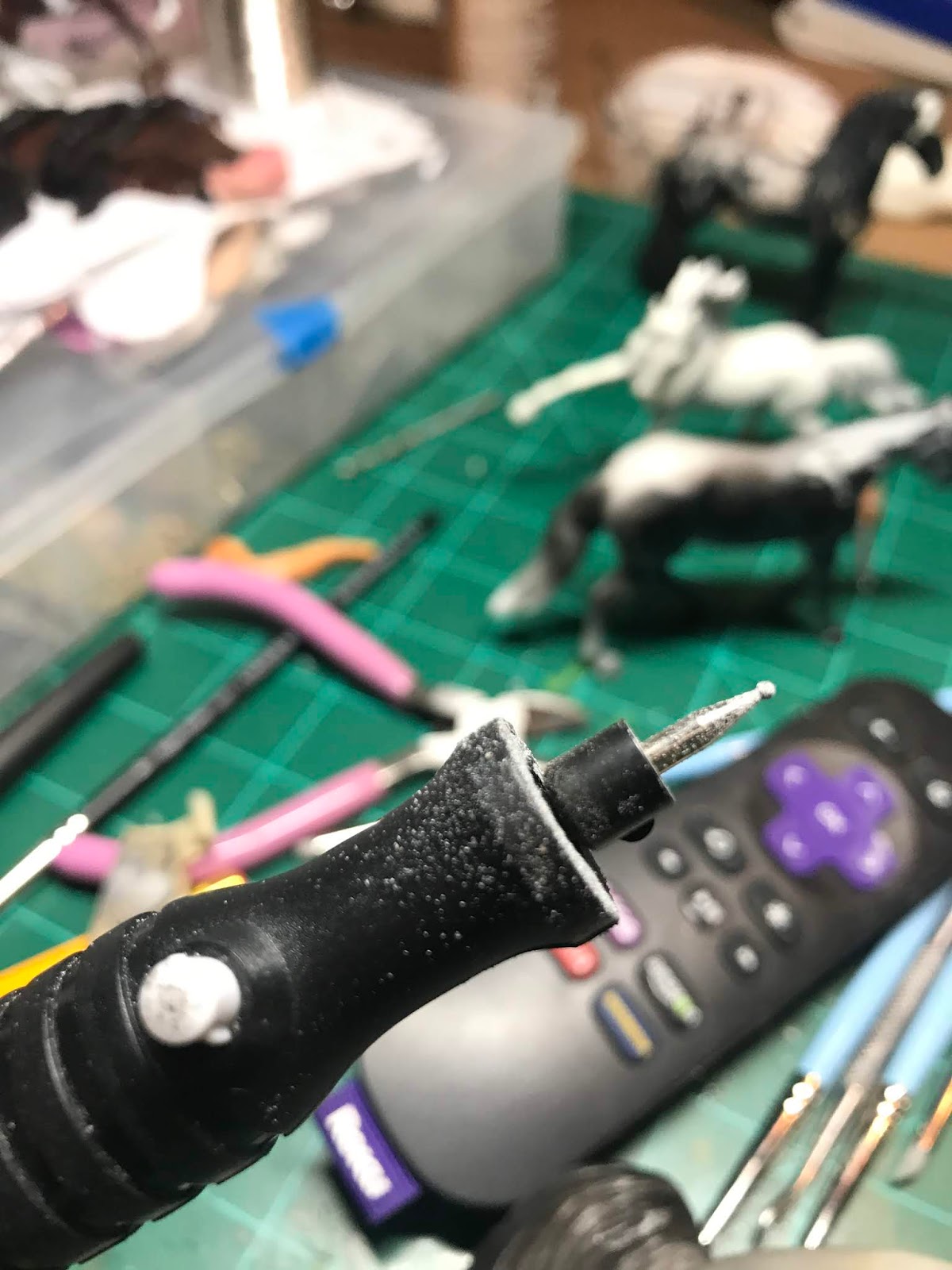
And then I grabbed my engraver and dremel and went at it. I whittled him down to pretty much an armature.
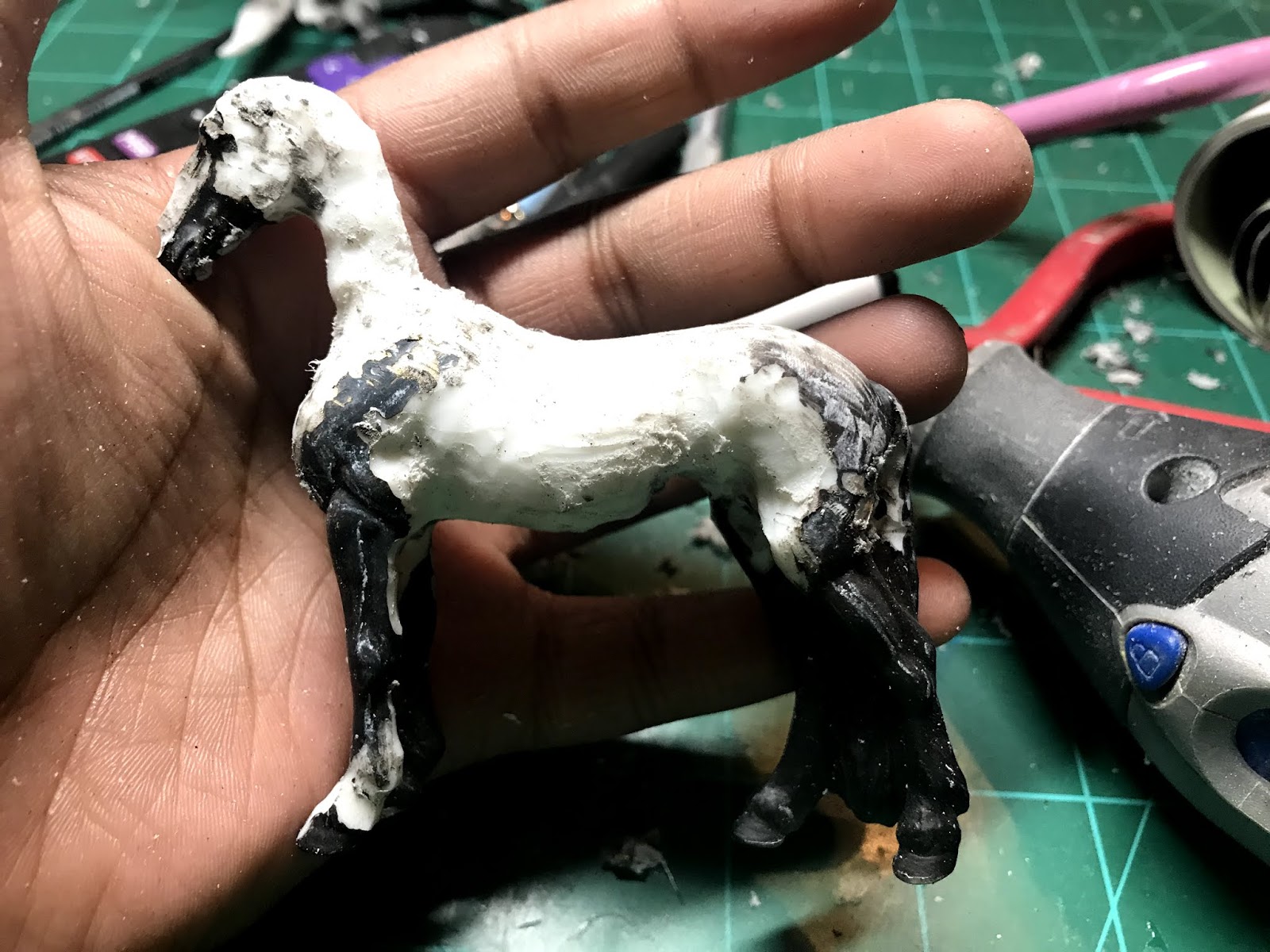
The trouble area was the tail area. Chopping the tail off took away some of his hind legs too. Oh well, it needed resculpted anyways. 
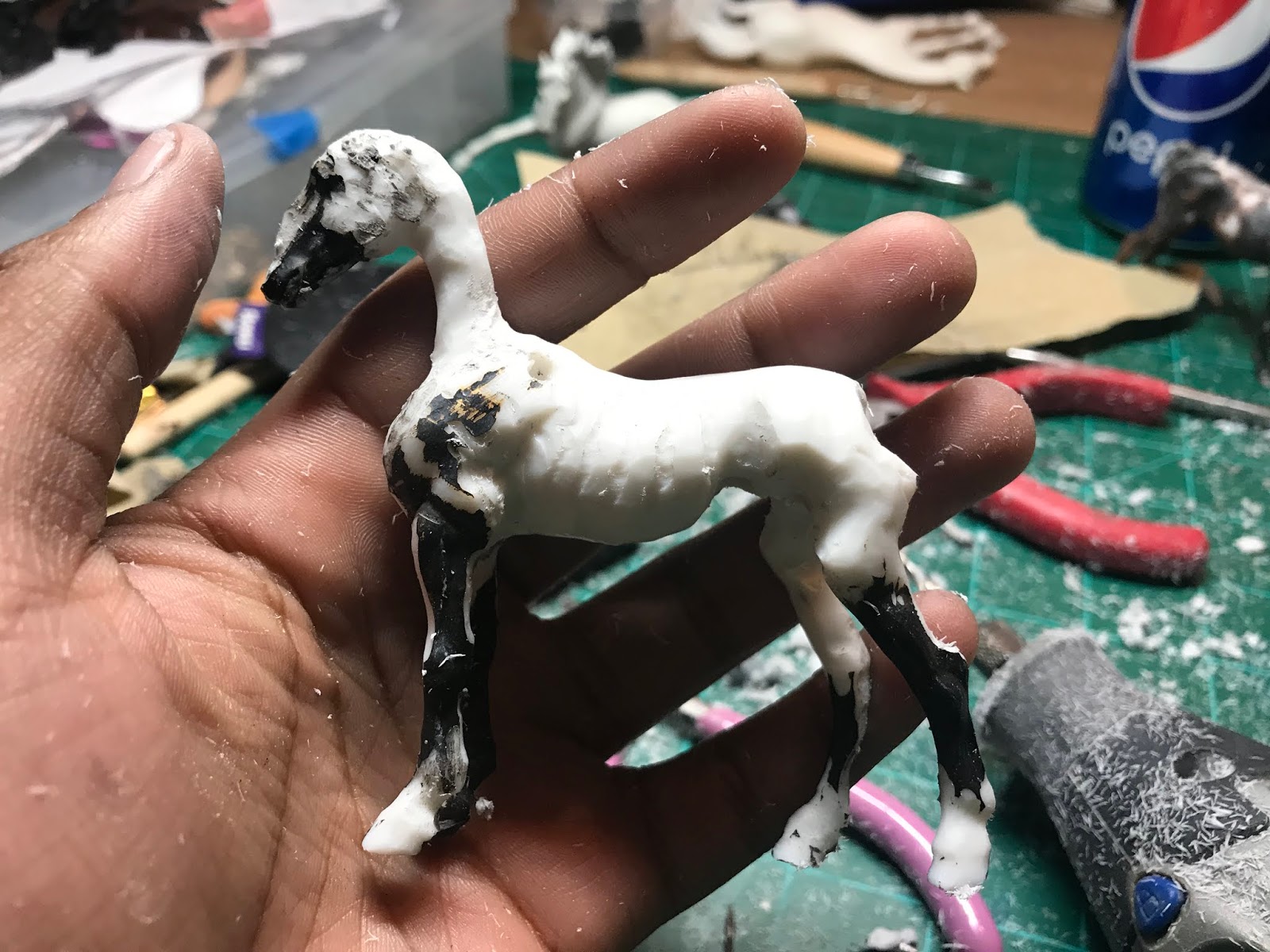
Threstals have long tails so I inserted a wire for that. Super glue and baking soda held it together. 
Next came the actual sculpting part. 
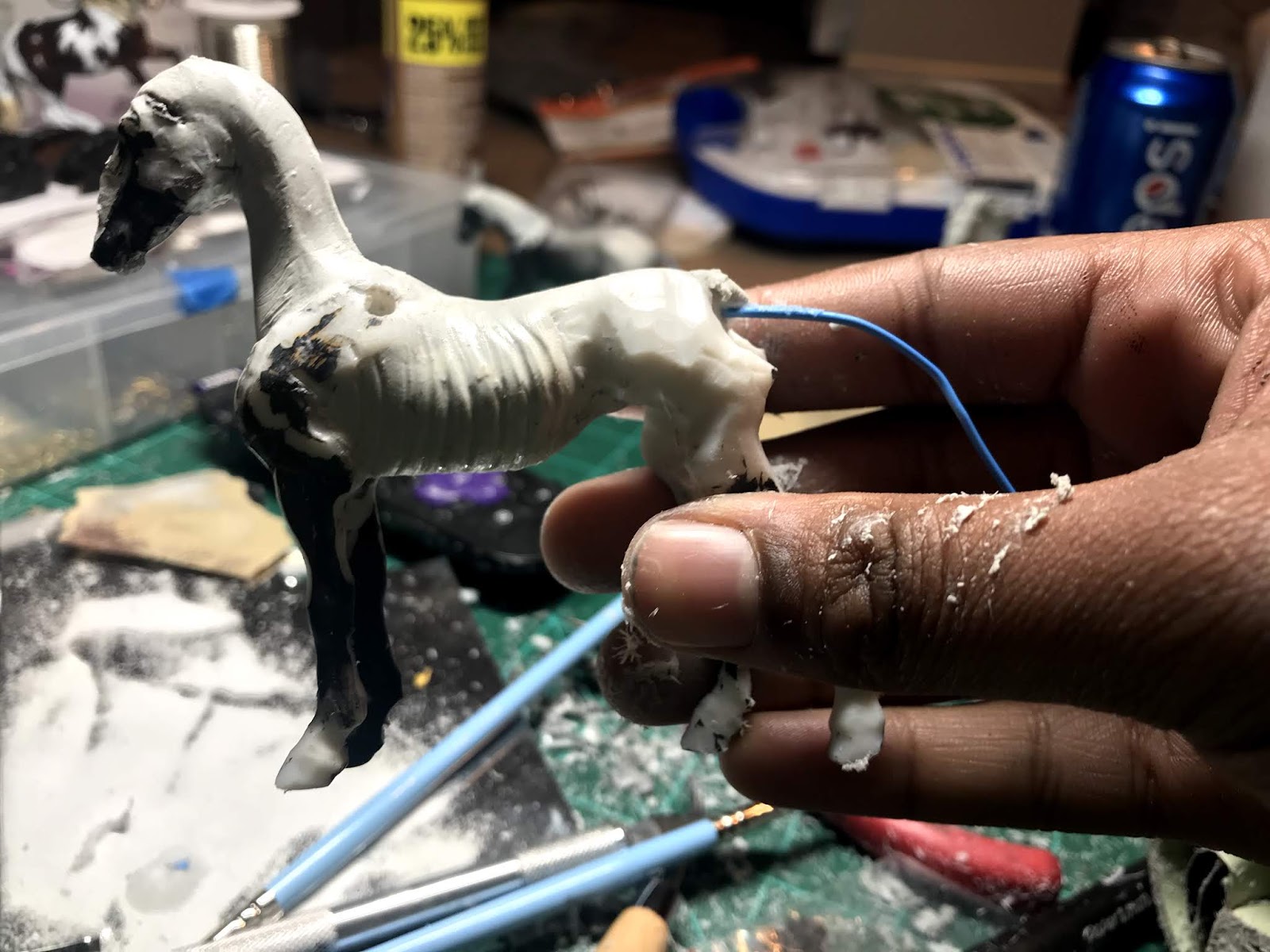
I finished one side of it in a weekend before putting it down. After I’d finished the face I thought wow, now I have to do the other side. I think I’m good for now. 
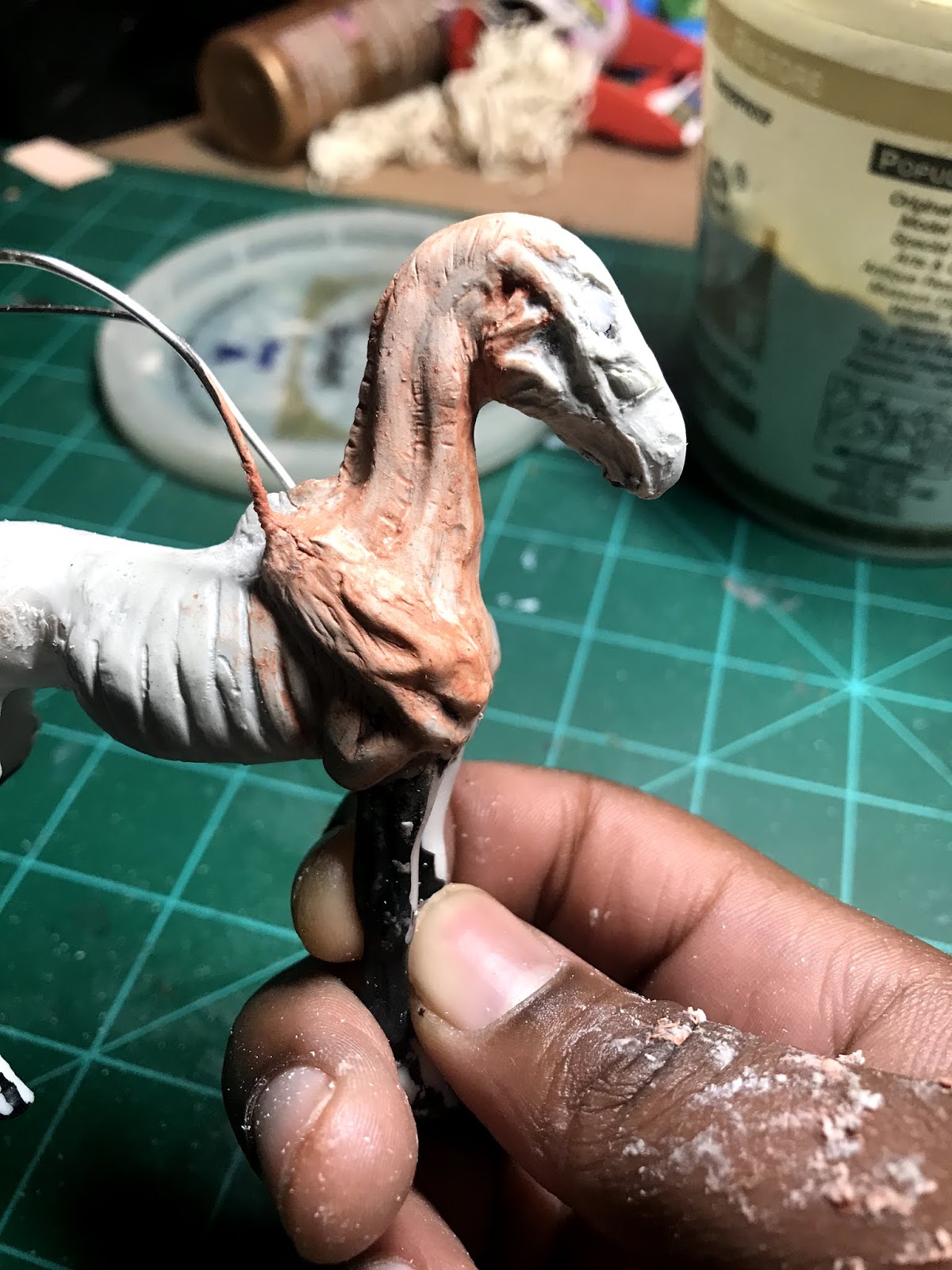
School took over and the Thestral was forgotten. After I finished the semester I decided to do more work on him. And the idea of entering the best of customs contest took hold. 
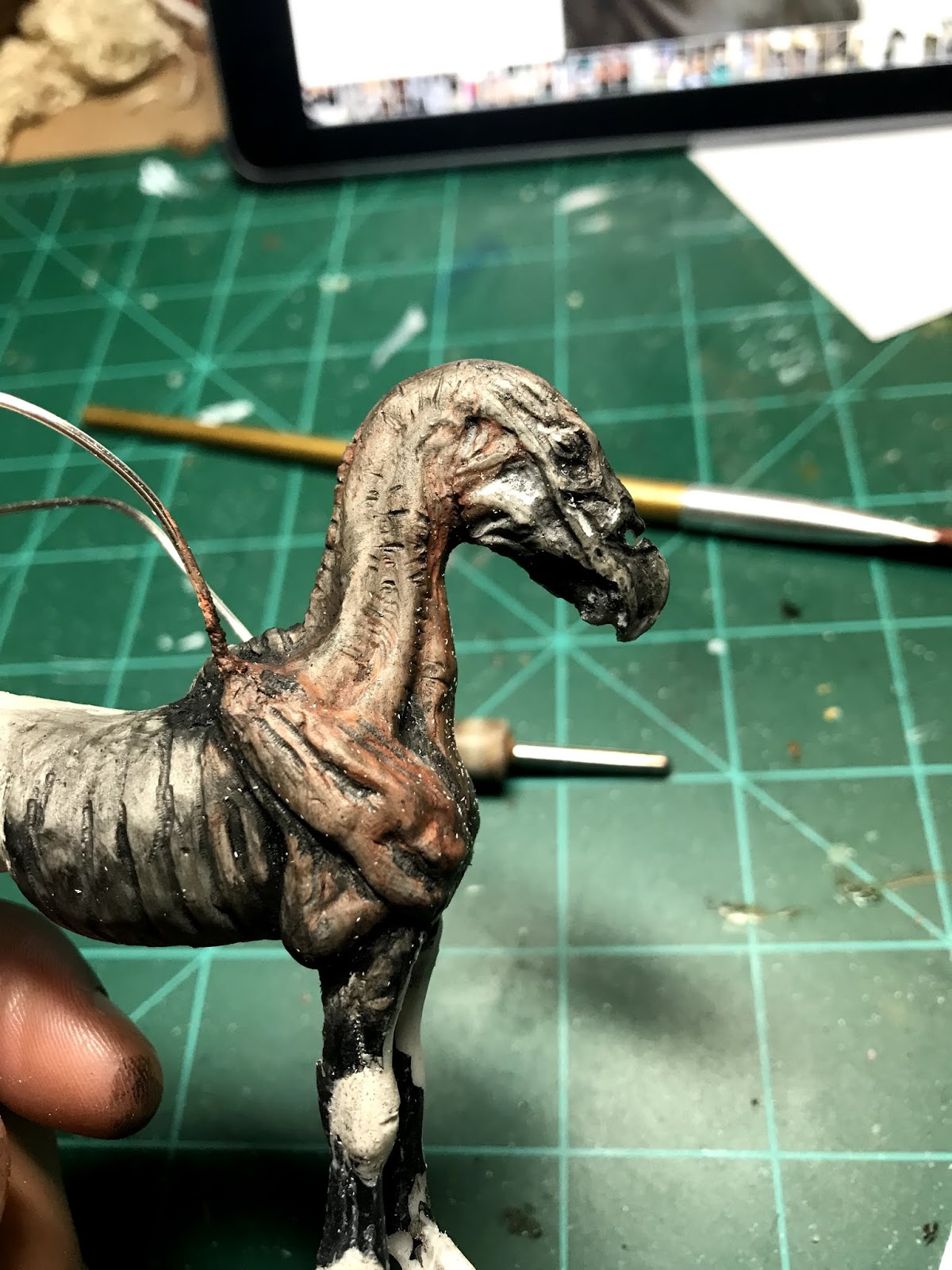
I stopped taking progress pictues because I needed him done, and done fast to meet the deadline.
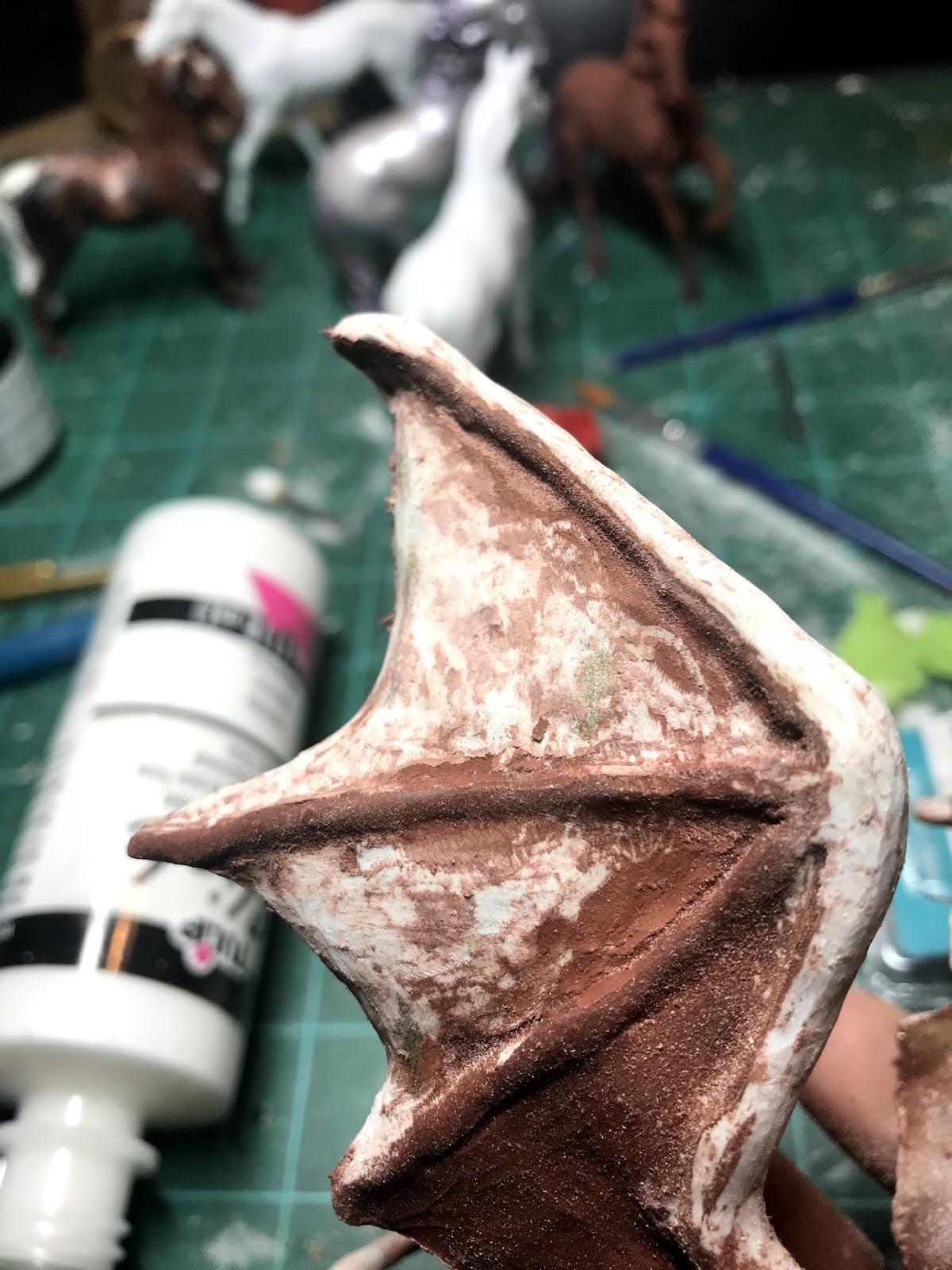
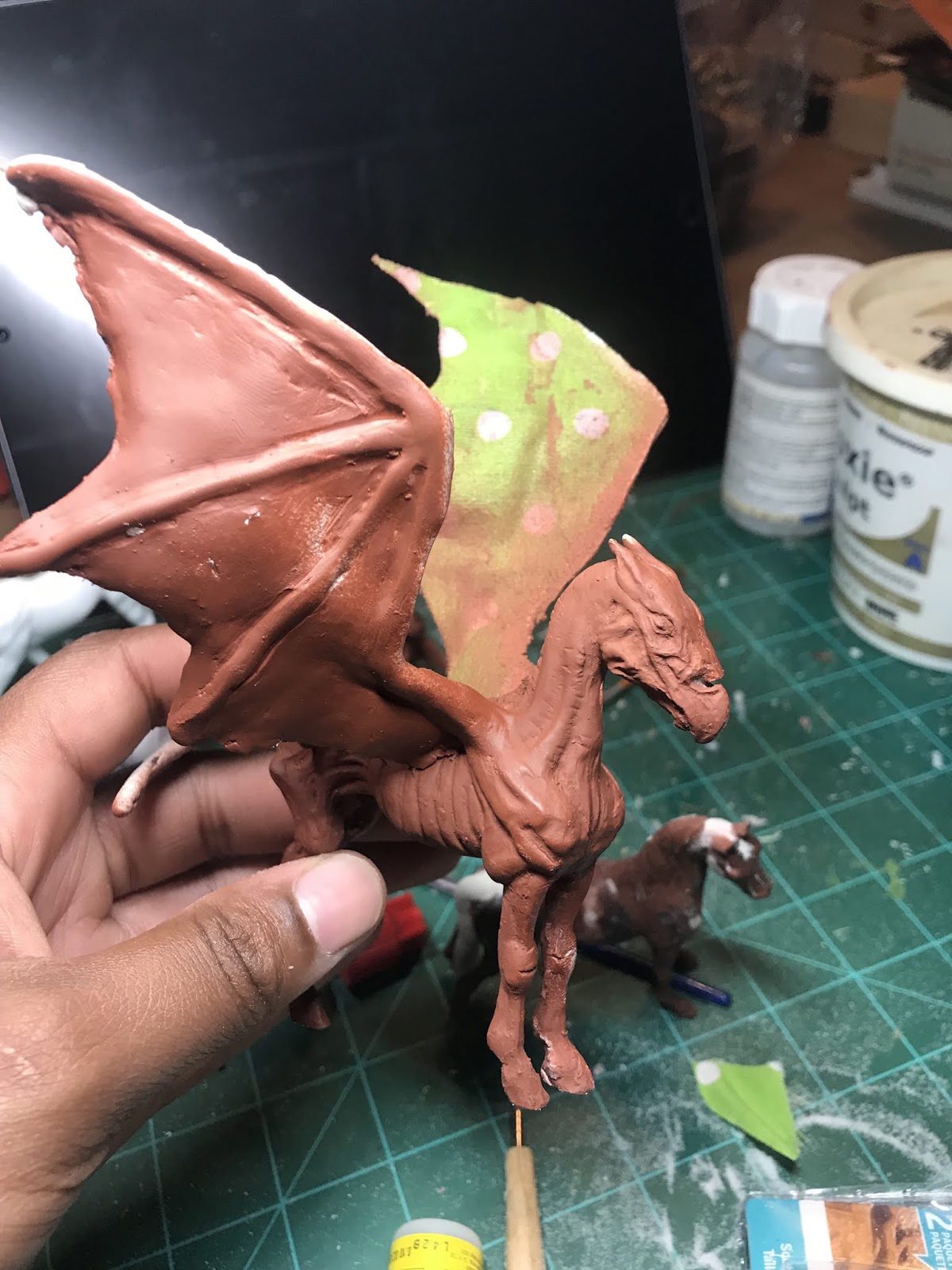
The wings required some creativity. I made an armature with wire and poka dotted fabric. I stiffened it with baking soda and super glue.
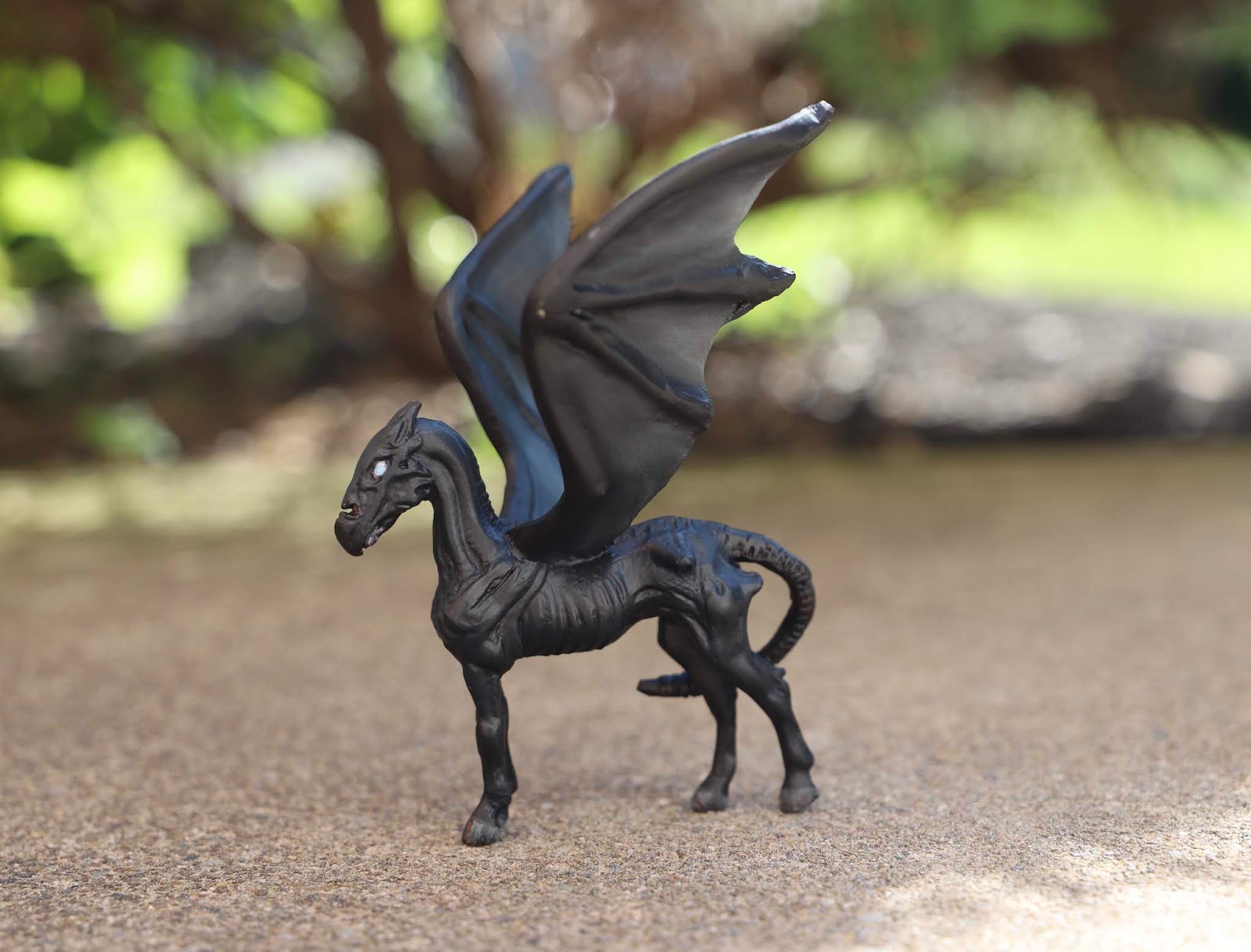
The Thestral gained the name Black Mirror because of my re-binging of the Netflix series.
After much sanding and painting, Black Mirror was done. He was photographed the last day the contest was open and the photos were submitted with two hours to spare. I’m really happy with how he came out. It has been a long time since I’ve resculpted something to this degree, so it was a nice challenge 
Time To Get Thrifty

I love to go to yard sales and thrift shopping, and in the last few weeks I’ve picked up some cool stuff.
I think the draw of it to me is the unknown. You never know what you’re going to find and that makes it the most fun.
I often find the most interesting model horse accessories. My favorite part of the hobby is the diy aspect of it so yard sales are the perfect spot to find odd objects. So here are some of the things I’ve found the last few weeks.
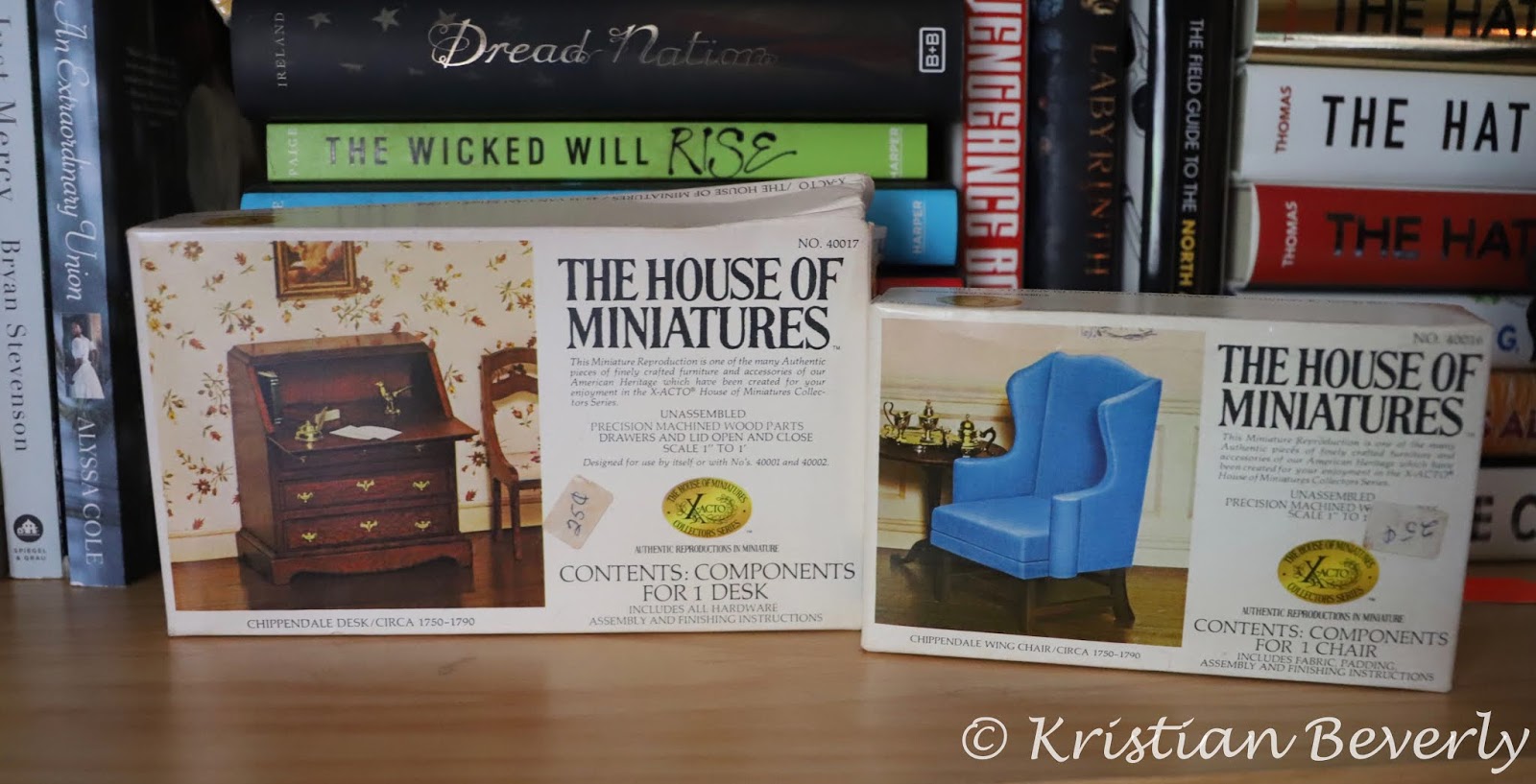
Furniture making is a hit or miss with me–but for a grand total of 50 cents I thought these two pieces would be worth a shot.

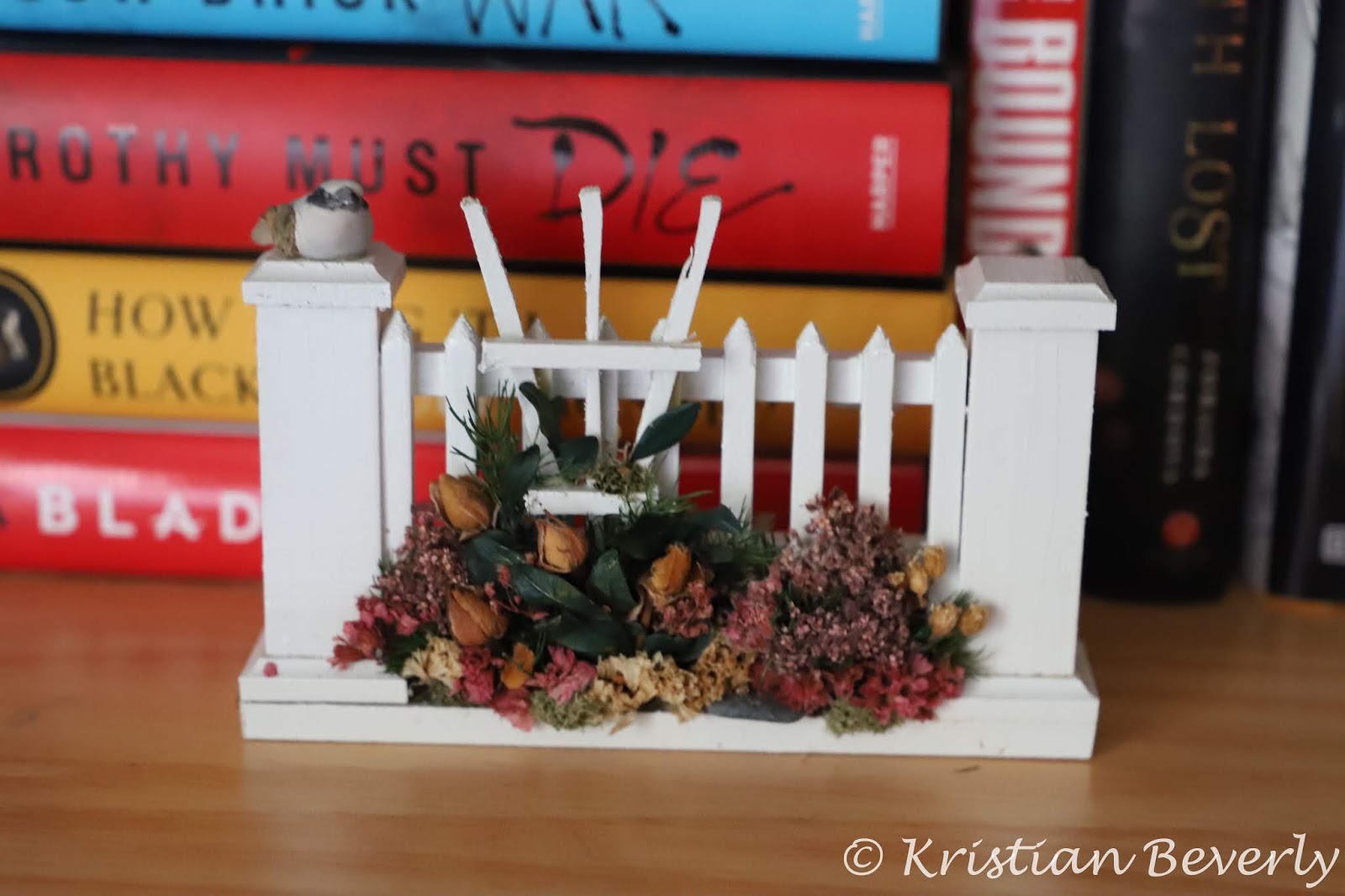
This fence is cute and all but the flowers and leaves will be perfect for a flower pot or something that requires plants. I don’t love to make flowers so I try to buy in scale ones whenever I see them. There’s enough to make two pots.

There’s something this can be used for. It could be a part of a jump or a part of a trail obstacle.

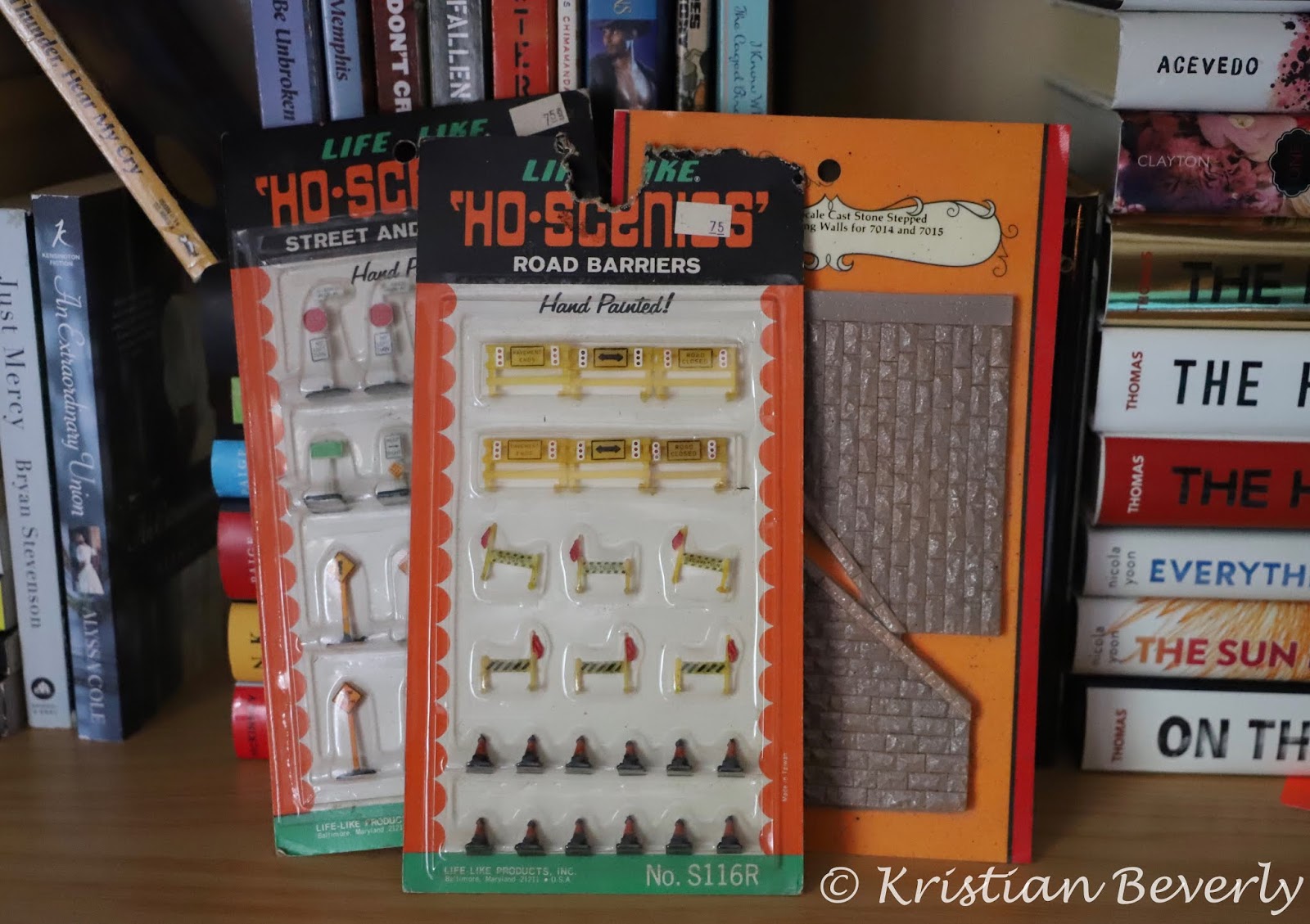
These HO things are tiny. I haven’t figured out what to do with the wall thing, but the box of potential props still has space.

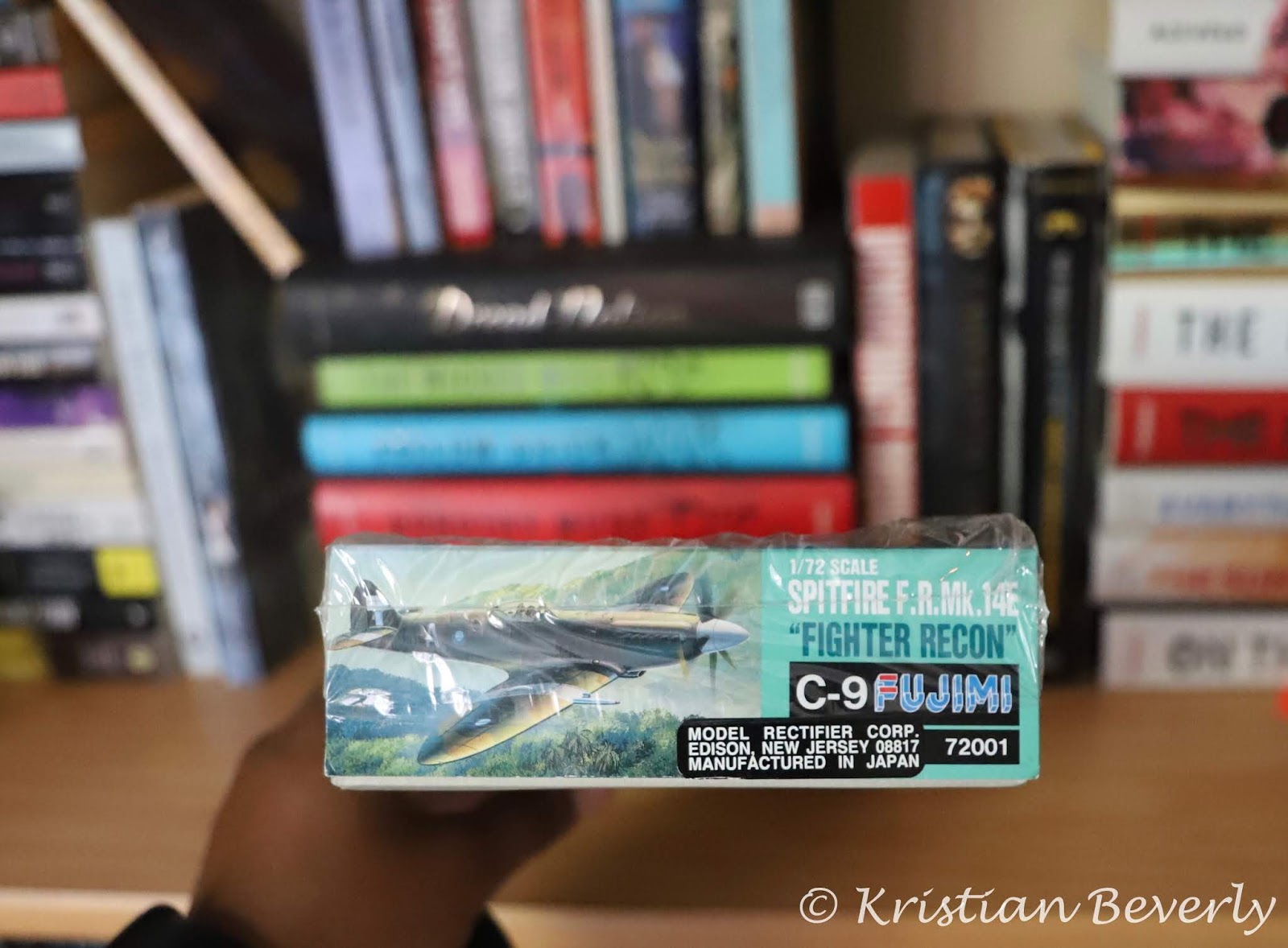
I’ve always wanted to put one of these together. It was cheap and unopened,so again,  I thought I’d give it a try.

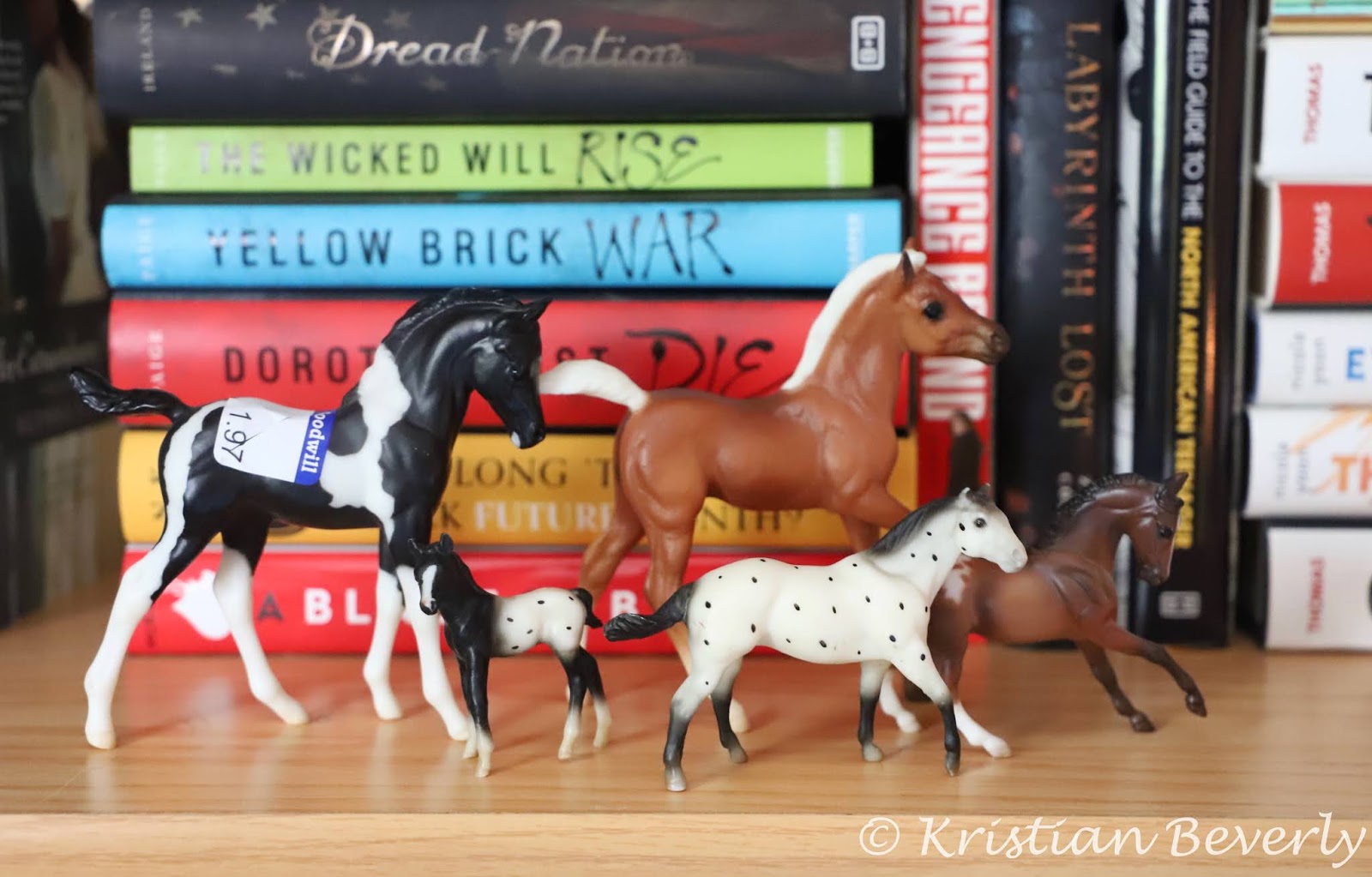
I’ve never found Breyers at my local Goodwill, but a few weeks ago I found a few classics and stablemates. The two foals will be my 2019 Feather Fund donations.

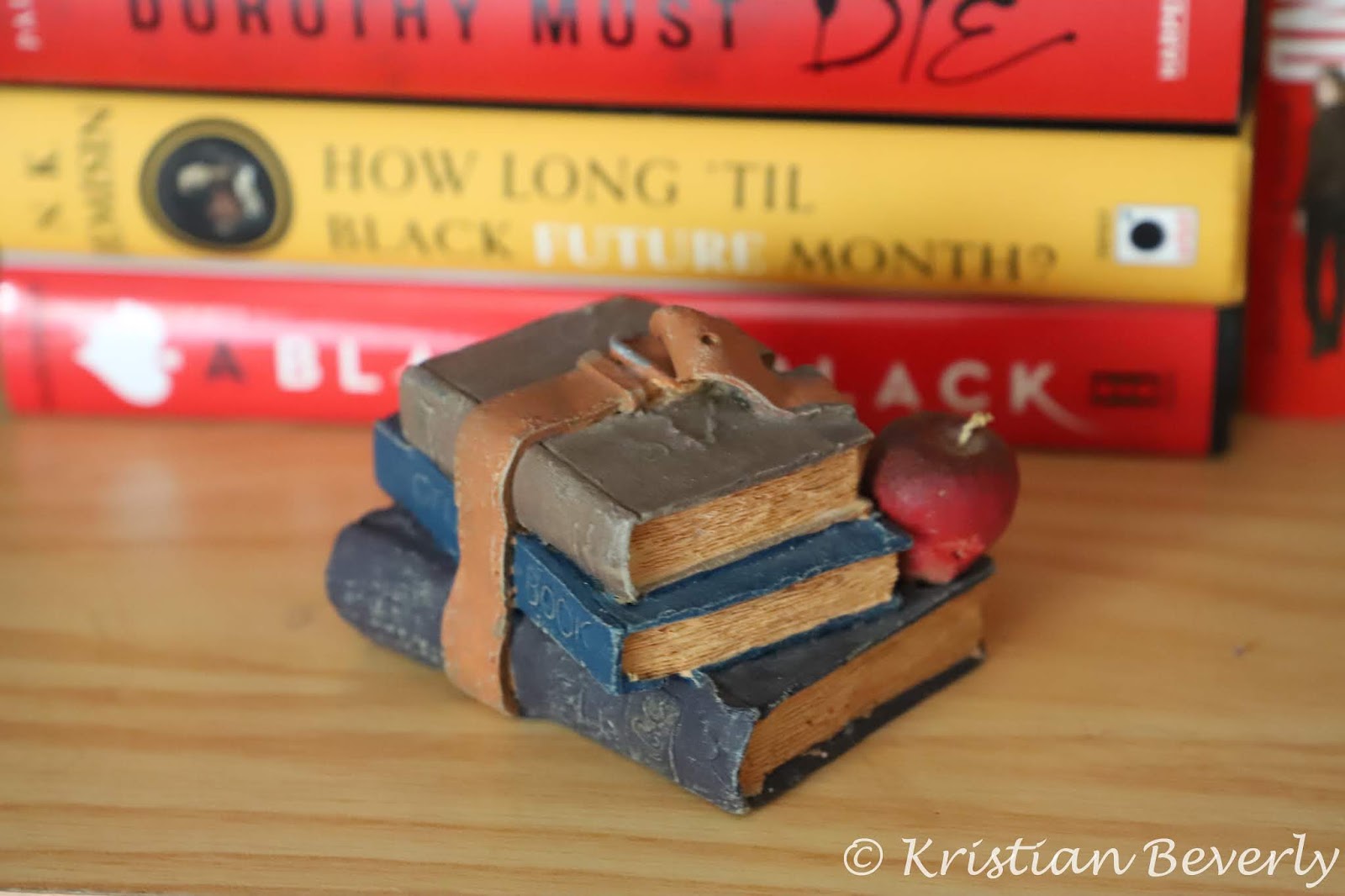
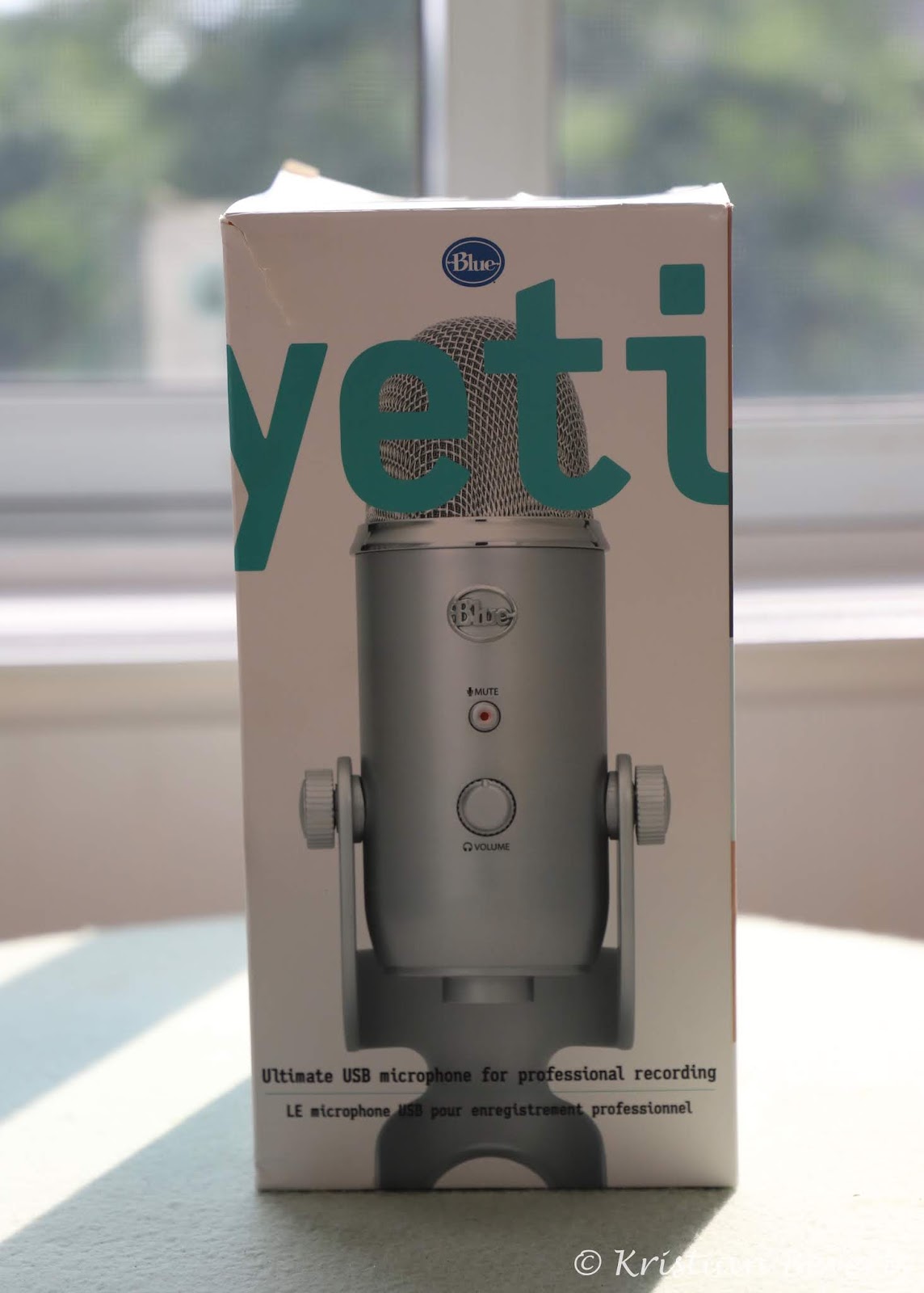
Now this was my find this weekend. I haven’t fully figured out what I’ll use it for but it’ll look nice on my computer desk until I do. I bought it for 3 dollars, decided to look it up online, and found that it’s worth 130$.

Whenever you pass a yard sale and have extra time, stop at it. You never know what’ll be there!

The Art Of Giving Critiques

My last how to post was all about how to receive critiques.

The next half is all about giving critiques. 

But what does that mean? How do you give a good critique? Well let’s critique an old piece of tack I made.
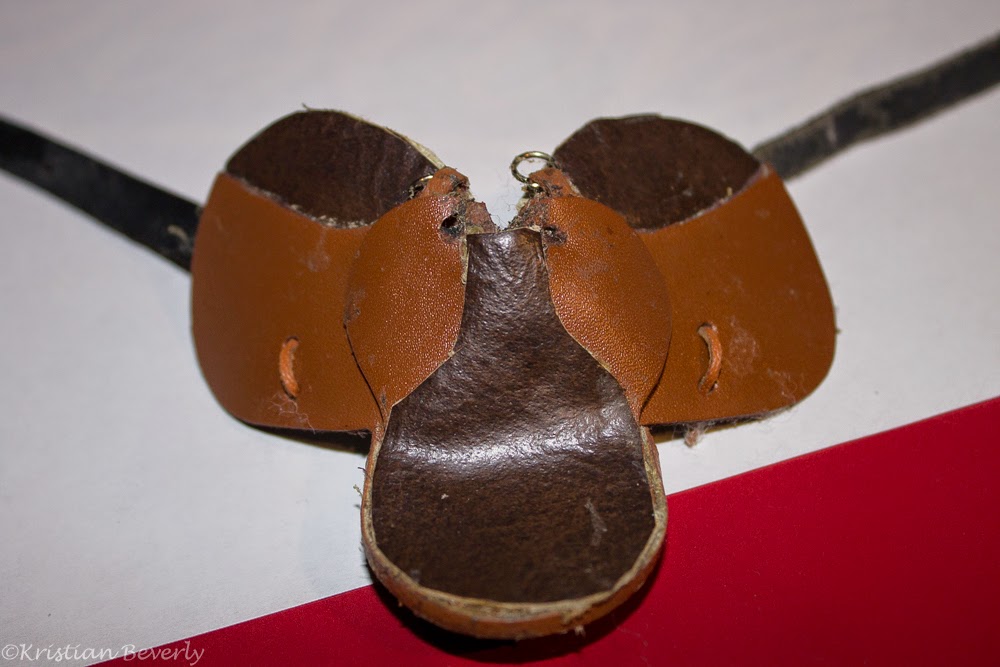
It is a customized Breyer saddle and one of my first saddles.

Years ago this was my peak. This was the ultimate thing I’d made. The knee rolls were perfect. The tree? No one could touch that! And the genius in reusing the girth from Breyer? Spot on. 
So how does one critique this–when there’s a lot to fix? 
Well let me show you the way you don’t do it. If you’re scrolling online and see a saddle like the one above, don’t post these sort of comments:
Everything is wrong. First off, rude. There’s at least one thing going on correct here. Secondly, how does that comment help the maker get better? 
This is terrible, why do you even bother?  Don’t be this person. You never know who you are warding off with such a comment. Everyone develops at a different pace. At the bare minimum, remember that just because you may have gained all of the knowledge of what does and doesn’t work,  doesn’t mean that everyone is in that same place. Also, spoiler alert, there’s always more to learn. It’s low hanging fruit to be decent.   
So how do you offer a critique? When giving advice always balance the positive and negatives. 
don’t care if what you’re shown is the worst thing you’ve ever seen, because you can always find a way to critique a piece in at least a neutral manner. Someone is putting themselves out on display to get better. This doesn’t mean lie to the person, but one can offer a critique that is helpful but doesn’t drive away a person from trying ever again. Be blunt. Be precise. Don’t be a jerk.
Being open to critiques does mean developing the ability to distance oneself from a personal piece and building a thick skin.
Anyways, the saddle above has a ton to be fixed. 
Here are some basic examples of critiques that could be given:
It’s nice that you’re starting out with tack making! Here are a few improvements.  Be aware of scale. D-rings are smaller. Also, look at pictures of real saddles. The tree should be more symmetrical.

What materials are you using? Reusing pieces of the original tack is a good idea, but you may find that different materials could help.
What are your references? A good reference can help with creating a saddle. While you are mimicking the usage of difference leather material for the knee roll and flaps, the transition and shape could be a bit more clean. 


You should be mindful of the shape of the saddle. It isn’t symmetrical. There shouldn’t be a piece of leather wrapped around the back like that. Be aware of tidiness. The knee rolls could be a bit cleaner and the d rings should be in scale. 

What if you give a well meaning critique and the maker doesn’t respond well? Well there’s a few things to do. Before deciding on your course of action, remember their name. If a person doesn’t respond well, remember their name for future reference.

First option is to not respond again. Make the decision if you’re going to spend your time helping them. If a person asks for help, and then snubs it, there’s no point in wasting your time.

Second option, Call them out. This is awkward and messy. Especially if a person is already acting immature. But if you believe there’s a chance that they could learn from their immaturity, try explaining the consequences to acting out.


Hopefully that helped some. Critiques are a staple in this hobby, and there are good and bad ways to do it.
Does anyone have tips or suggestions they’d like to add?

BEA aka Book Expo America

Yesterday I went to BEA, or Book Expo America. In the context of this blog, it could also be described as Book Breyerfest. So imagine Breyerfest–but with books. 
Book Expo America is the largest annual book trade fair in the United States and in the past few years taken place in New York City. 
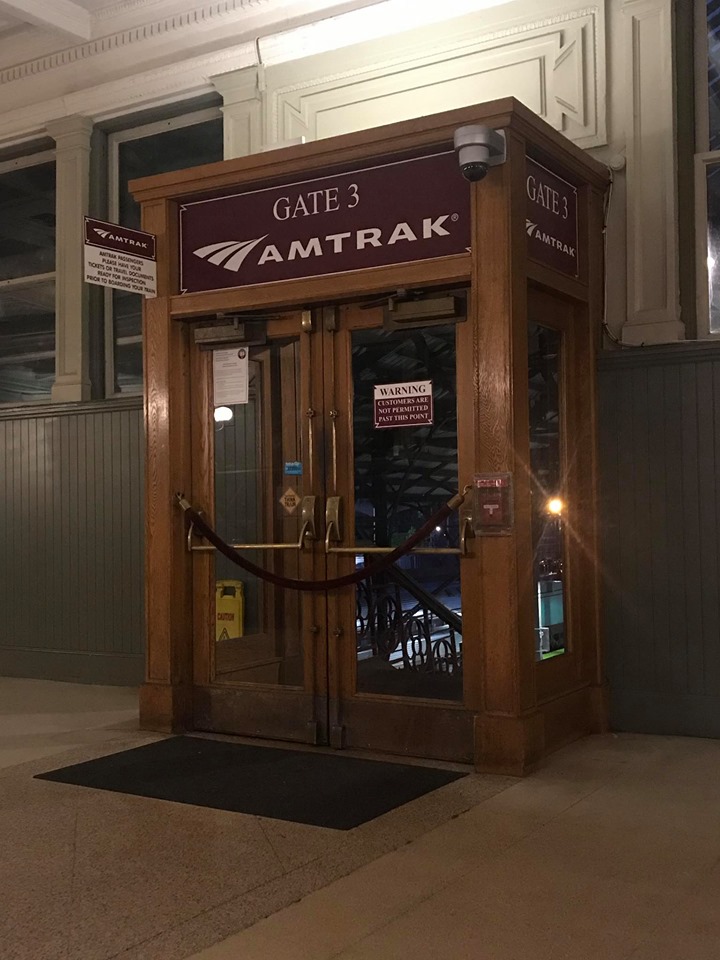
I went with my boss, Michelle. This was our first time attending it. We opted to take the train in because neither of us wanted to drive in the city. Nor did we want to fly. NYC is only 3 hours away from Harrisburg so the train made sense. My sister marveled at why I was taking a suitcase if I was going to be in NYC for only a day. But how else could I carry books home? And trains allow you to have numerous bags–checked and carry on.  
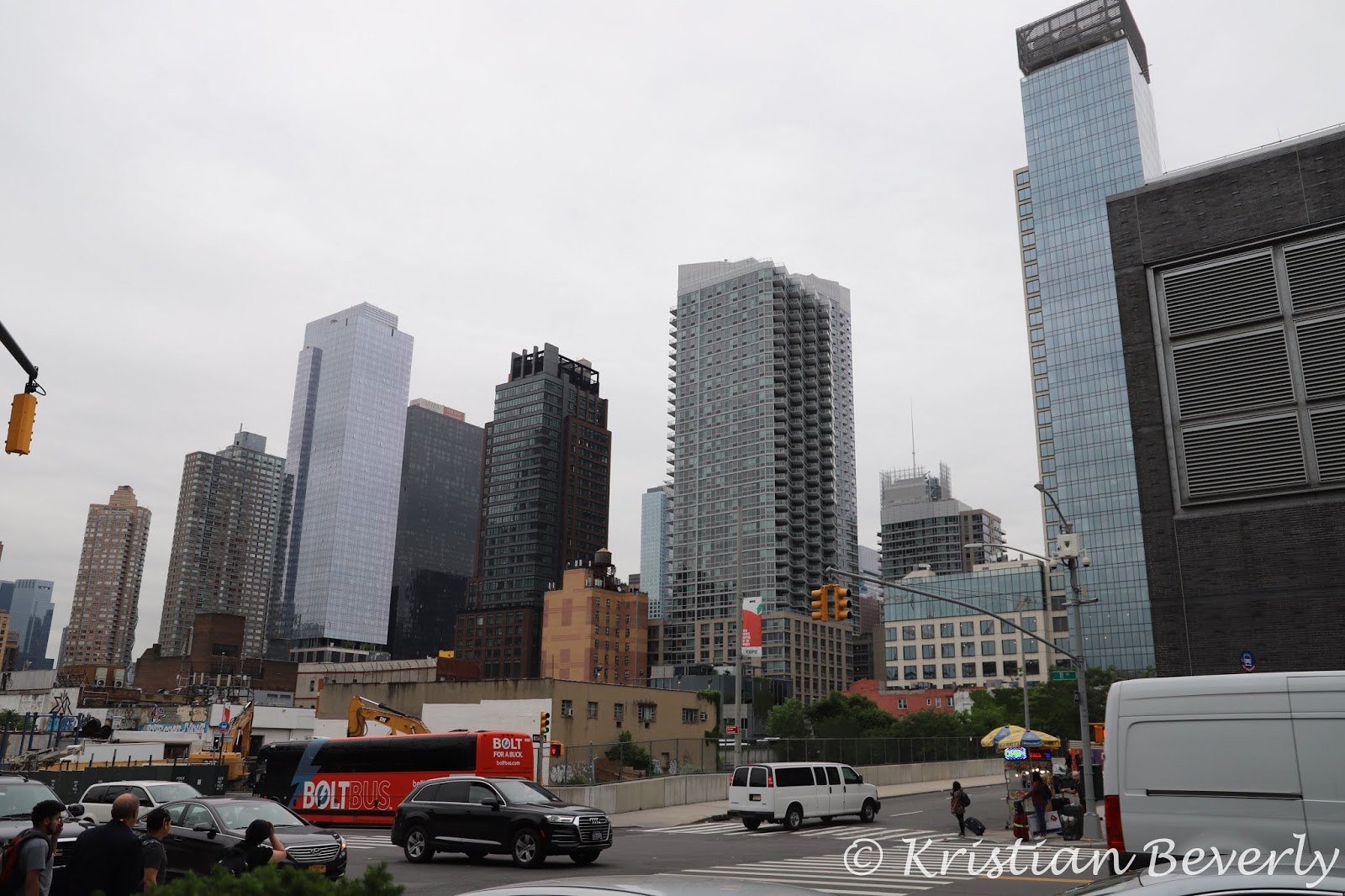
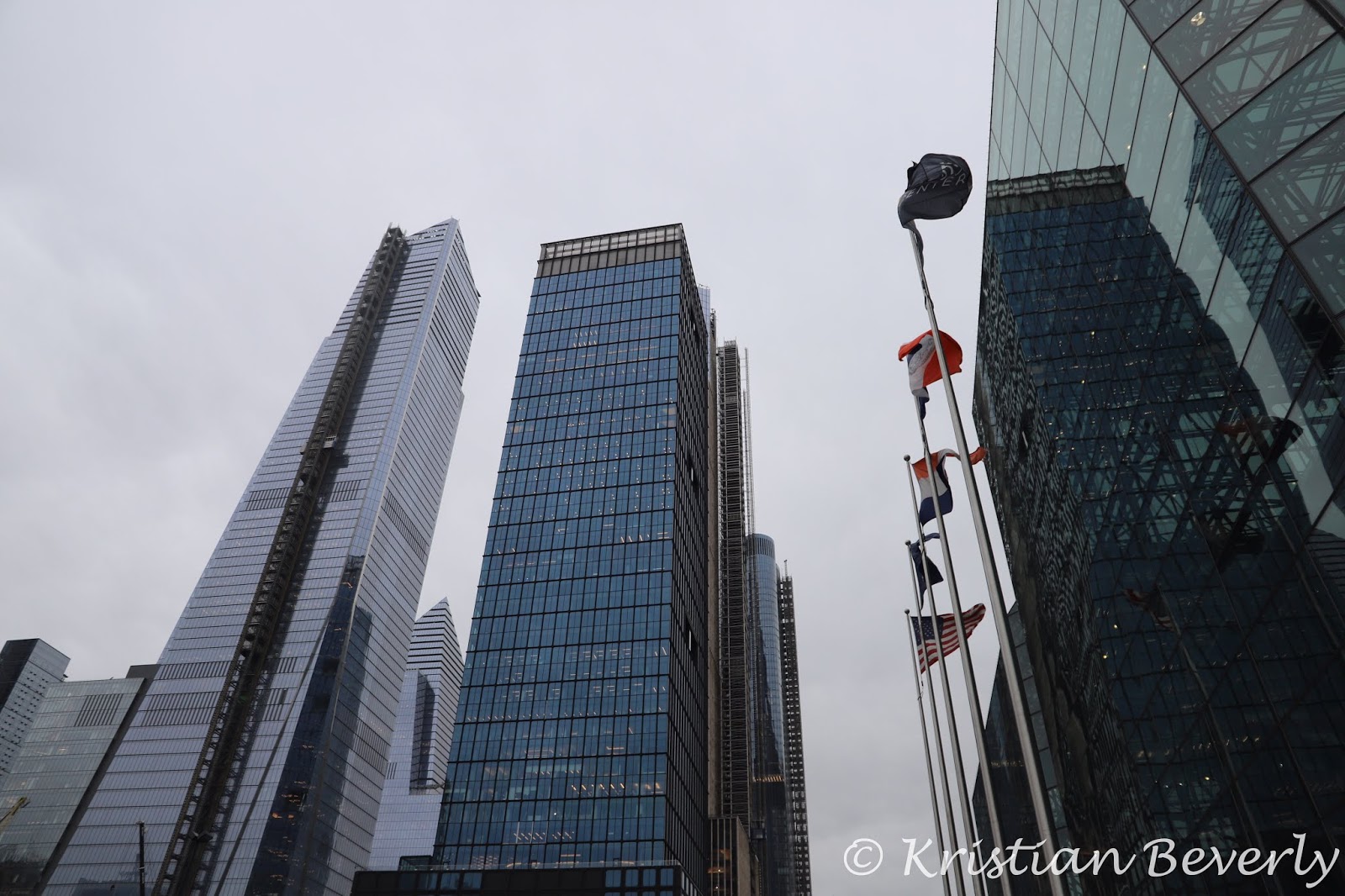
We arrived in NYC around 9:30 and walked to the Javis center. 
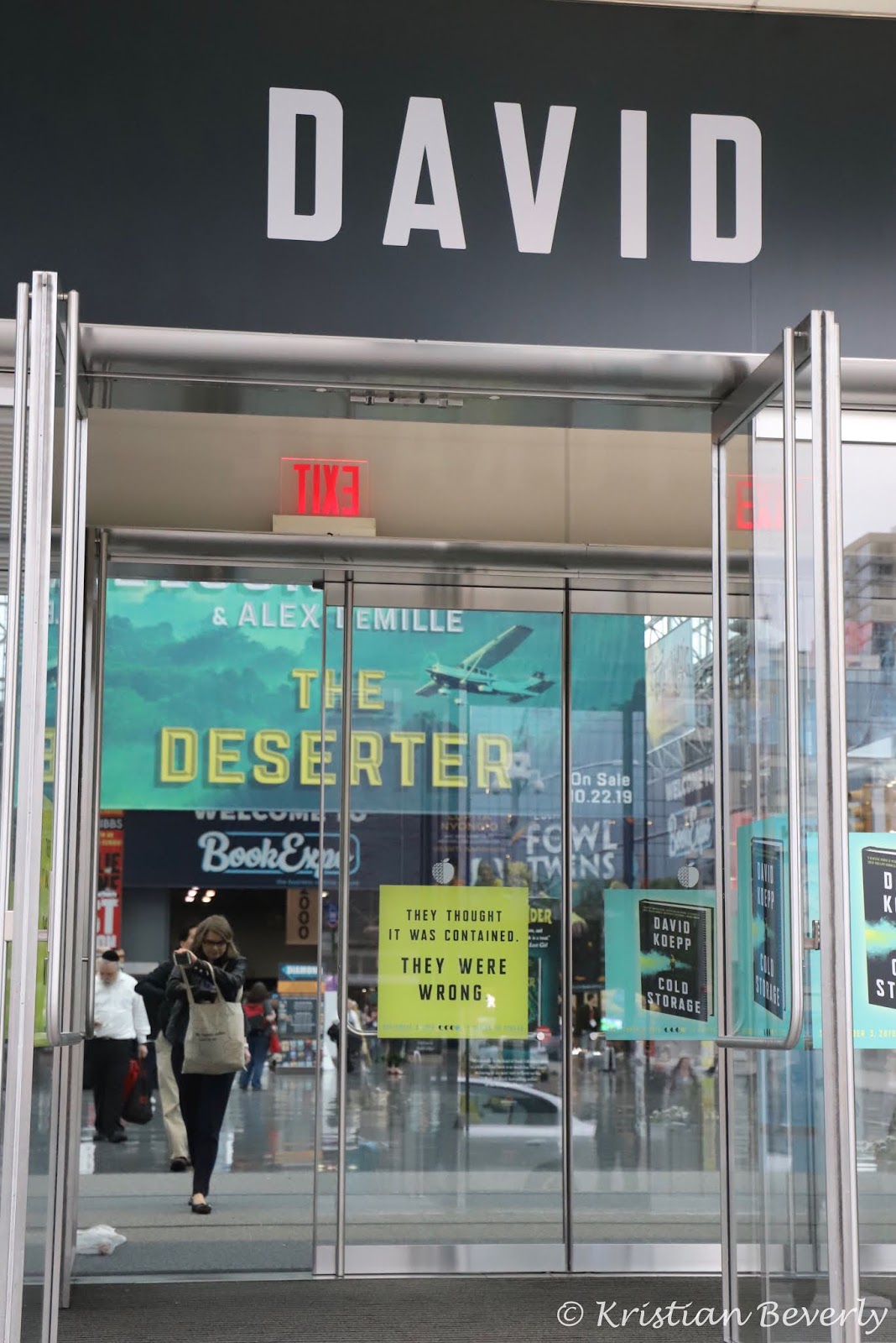
The sky looked pretty ominous the whole day, but there was nothing ominous about the inside of the building. 
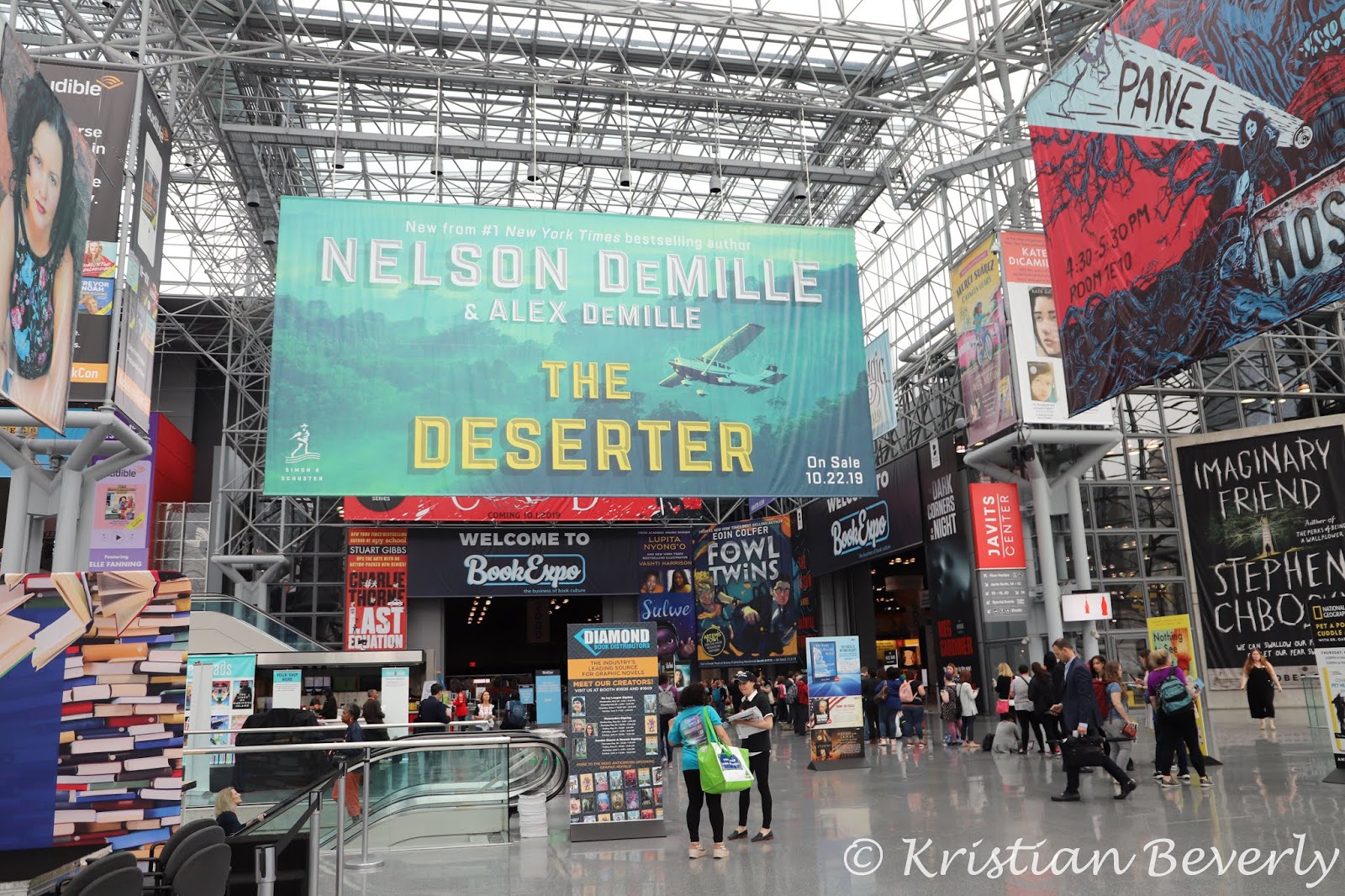
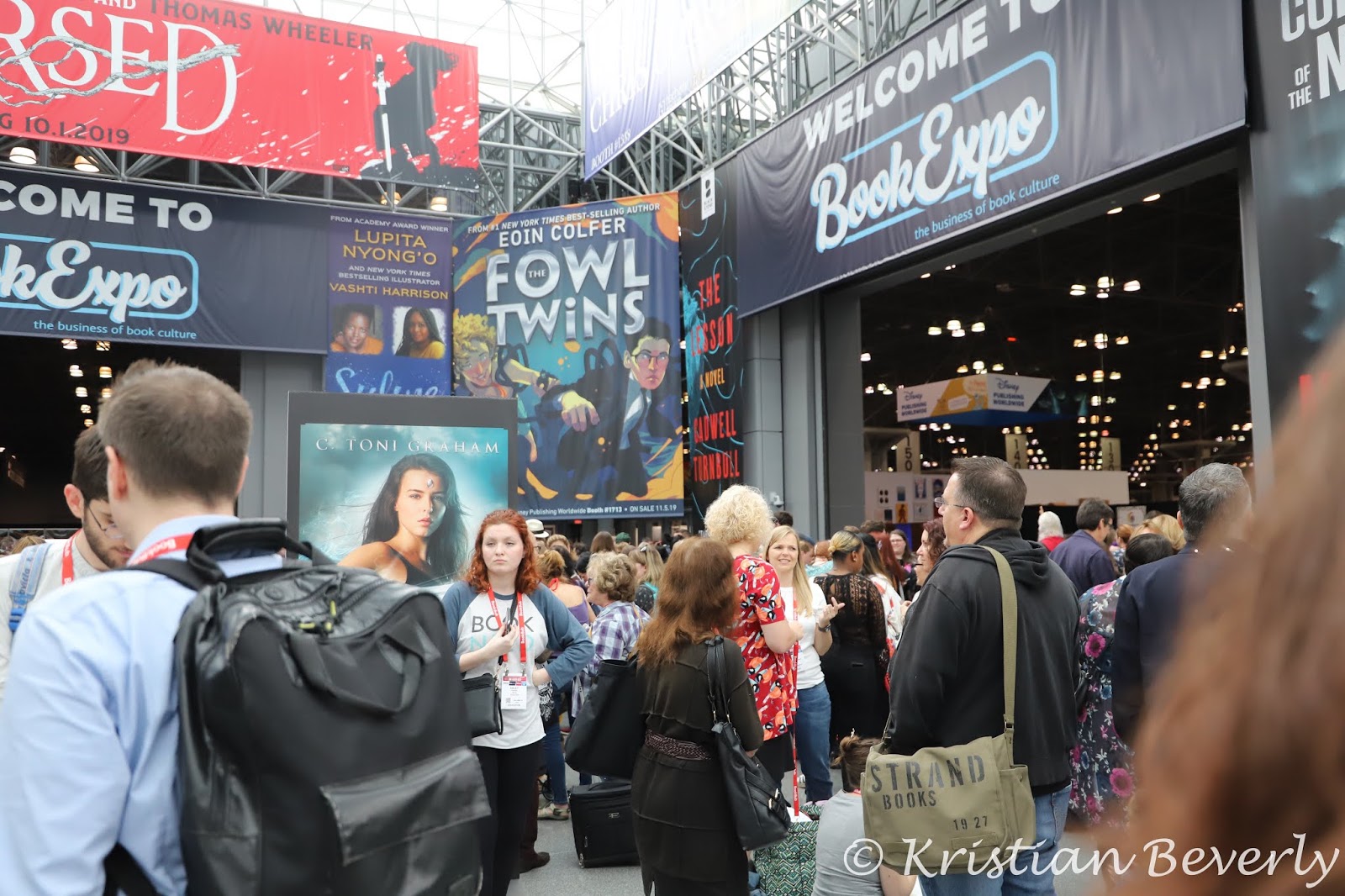
Once you stepped inside, you entered book wonderland. 
BEA is the precursor to BookCon. BEA is for industry professionals–like editors, agents, booksellers, and book media professionals. BookCon is for everyone previously mentioned and readers outside of the industry. We grabbed our badges, which had VIP since we’re ABA members (American Bookseller Association). This gave us access to a special lounge with comfy seats and cool stuff like that. 
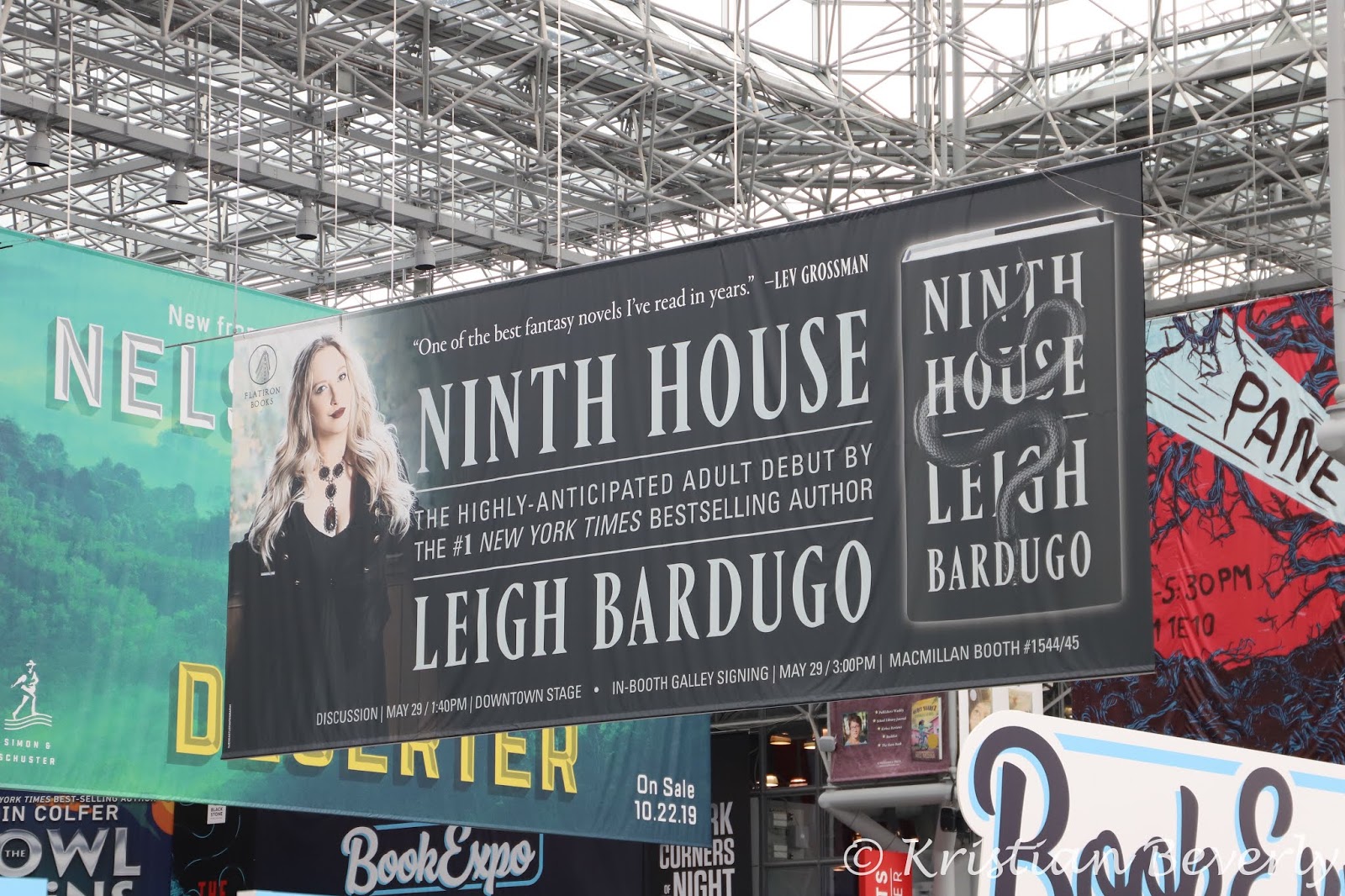
There were posters promoting upcoming releases. This book sounds p-h-e-n-o-m-e-n-a-l. 
Rick Riordan presents is such a cool imprint. 
Yes to this one. 
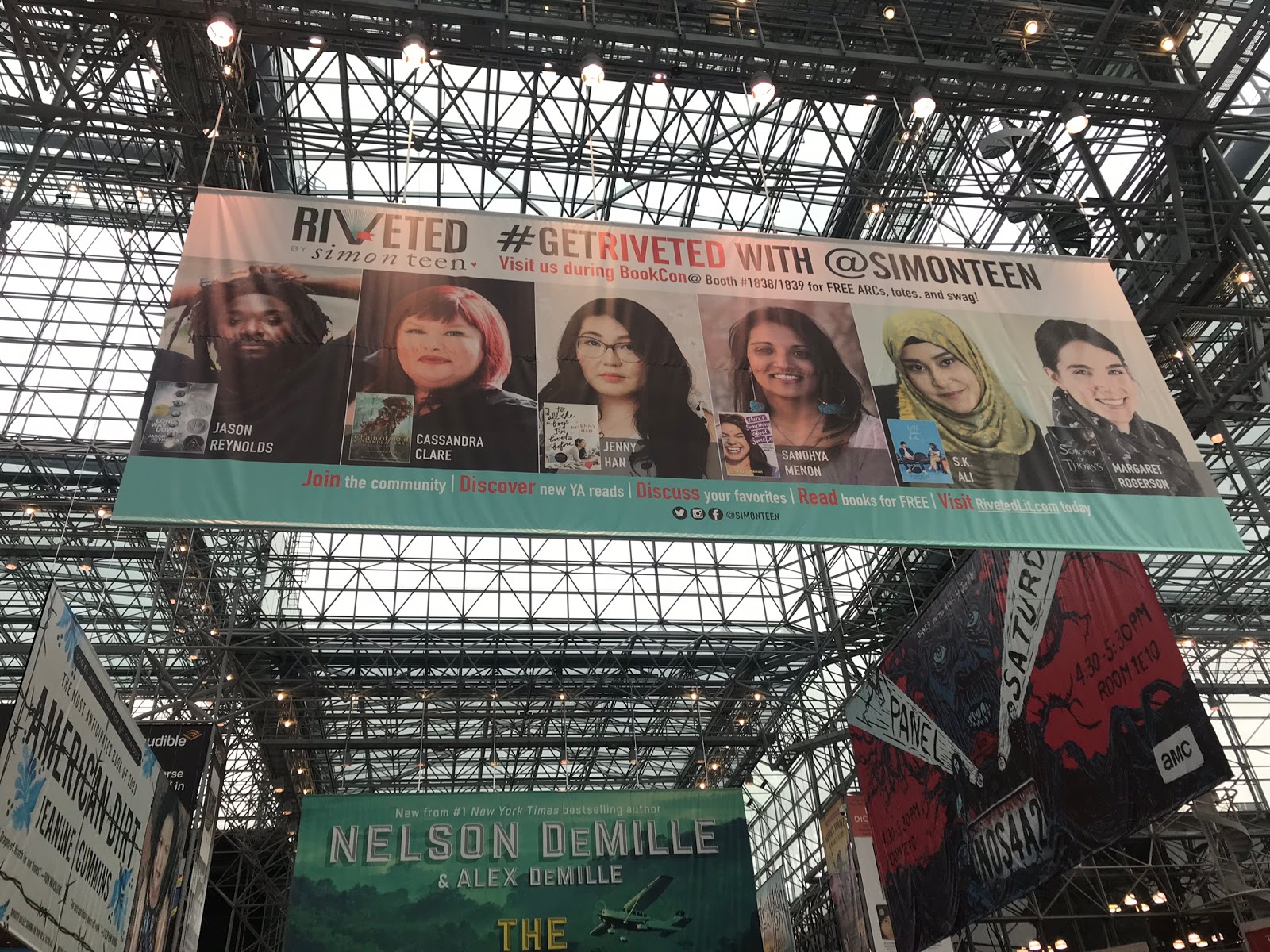
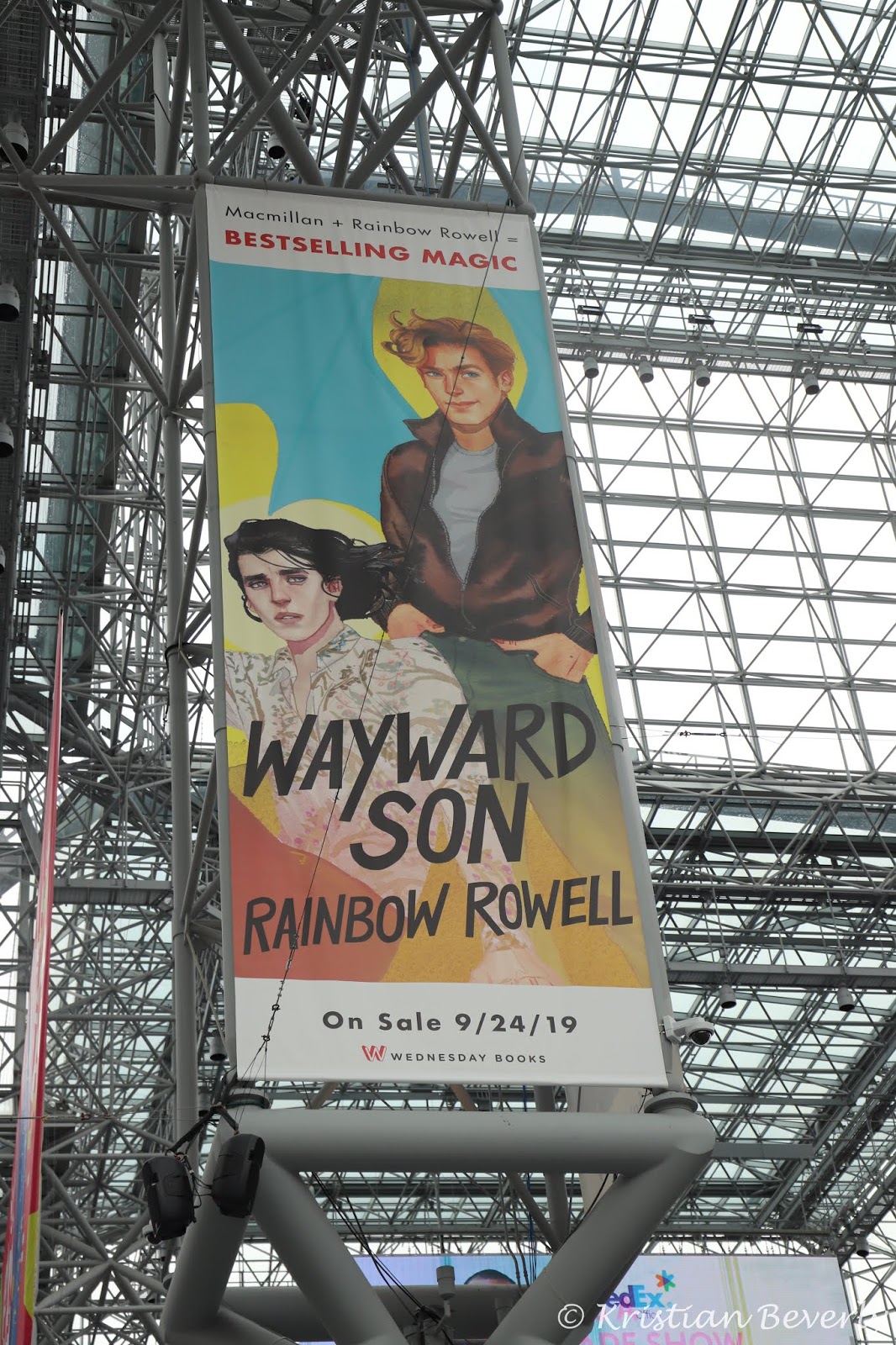
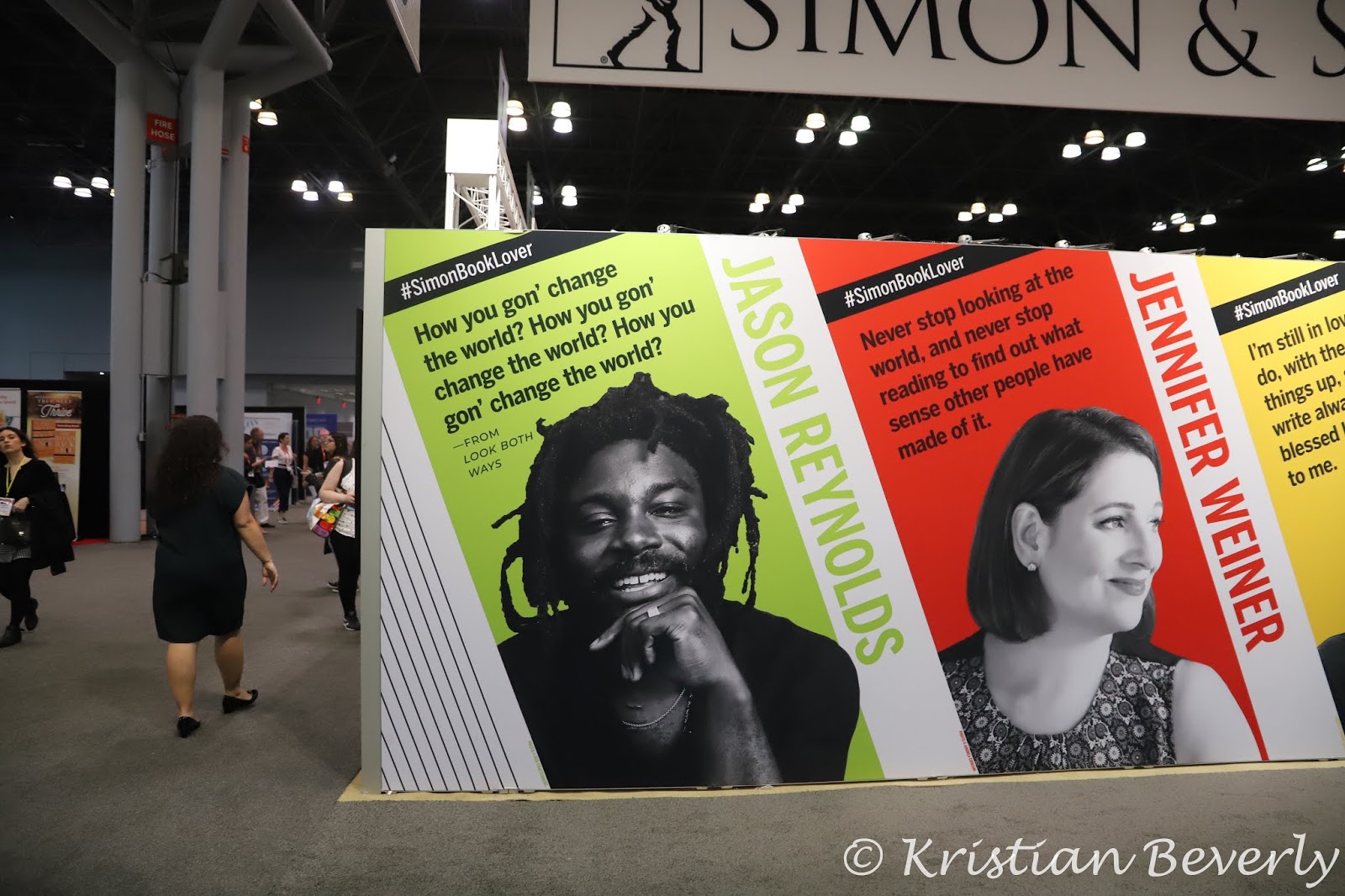
There were banners everywhere. 
We arrived at the center early so we could check our luggage and meander around for a bit. We met up with a local friend and watched some of a panel about cross platform books. 
After that we waited with others for the opening of the trade show. 
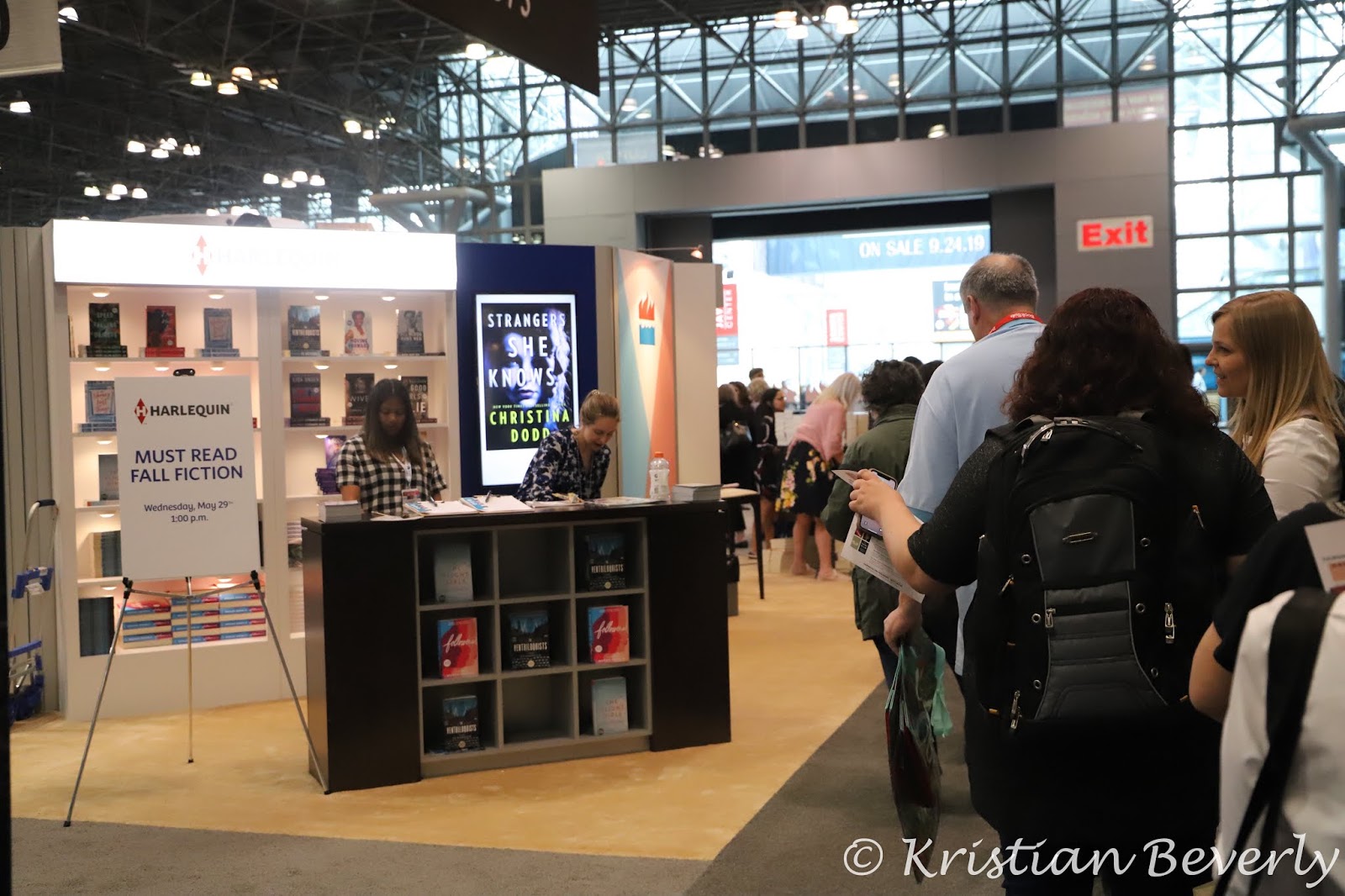
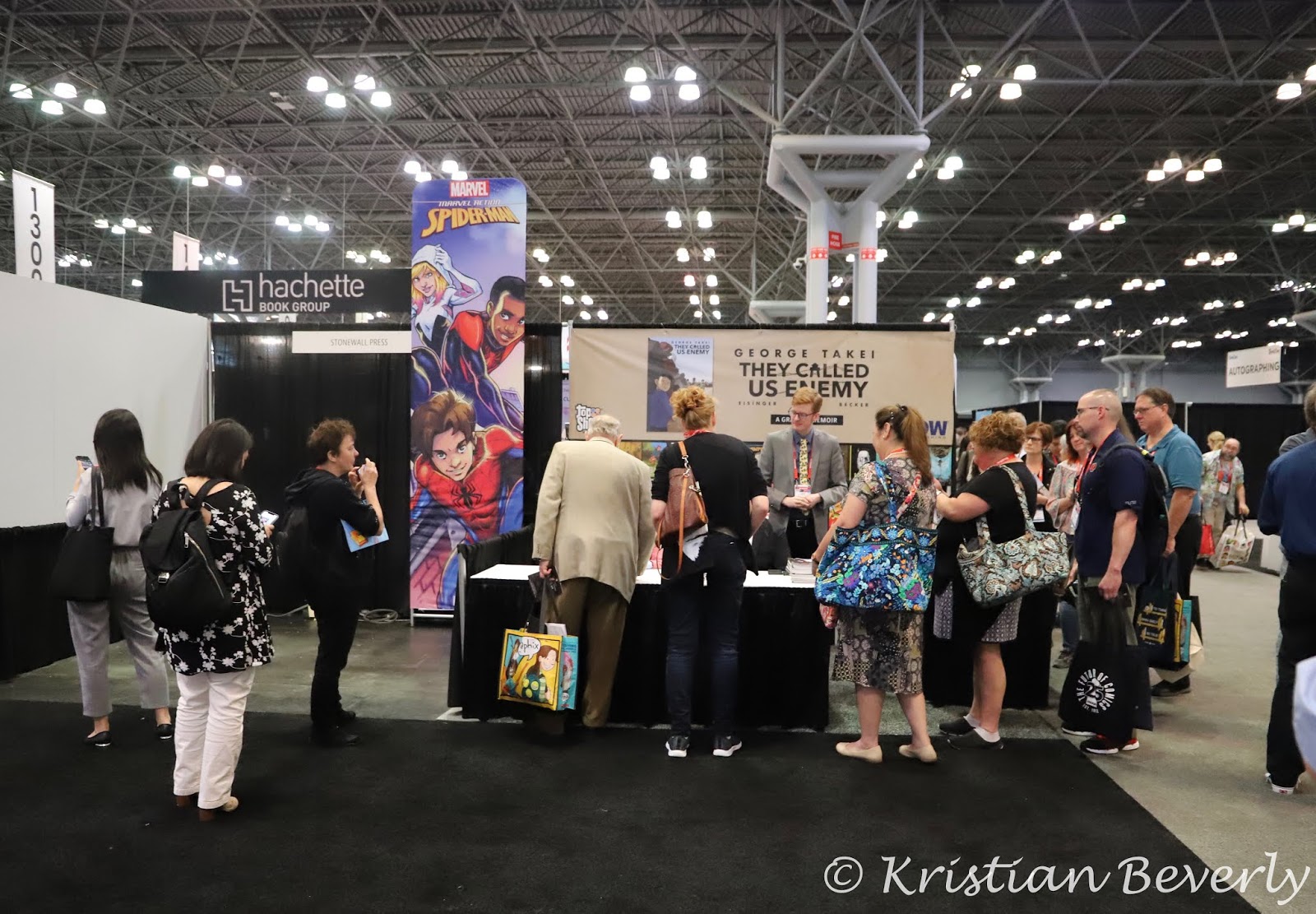
Once the doors opened, everyone scattered. The publishers-like Penguin, Macmillan, and RandomHouse-had booths. Graphic novelist and Scholastic also had spots. 
Everything was decorated and organized so nicely. 
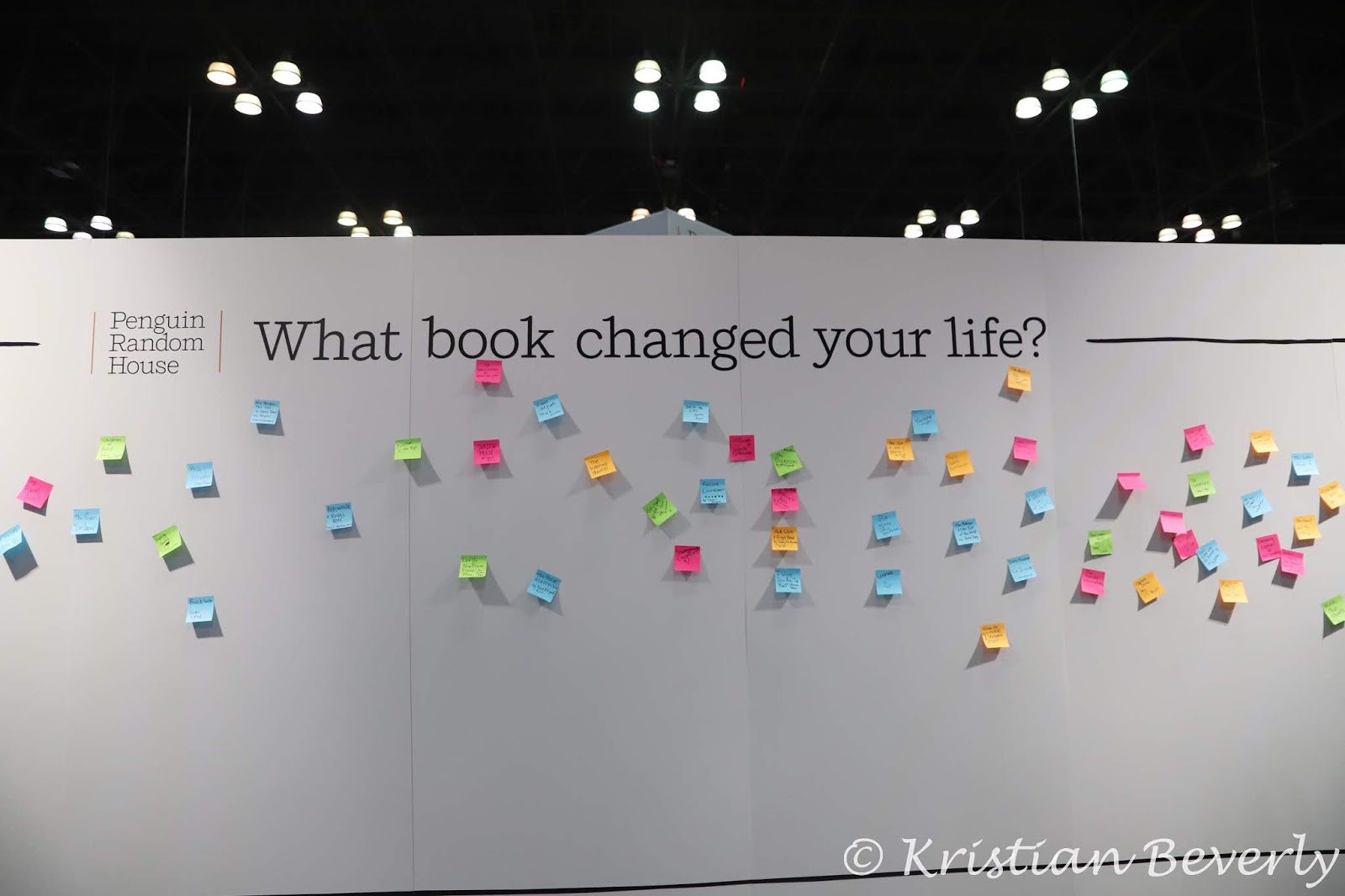
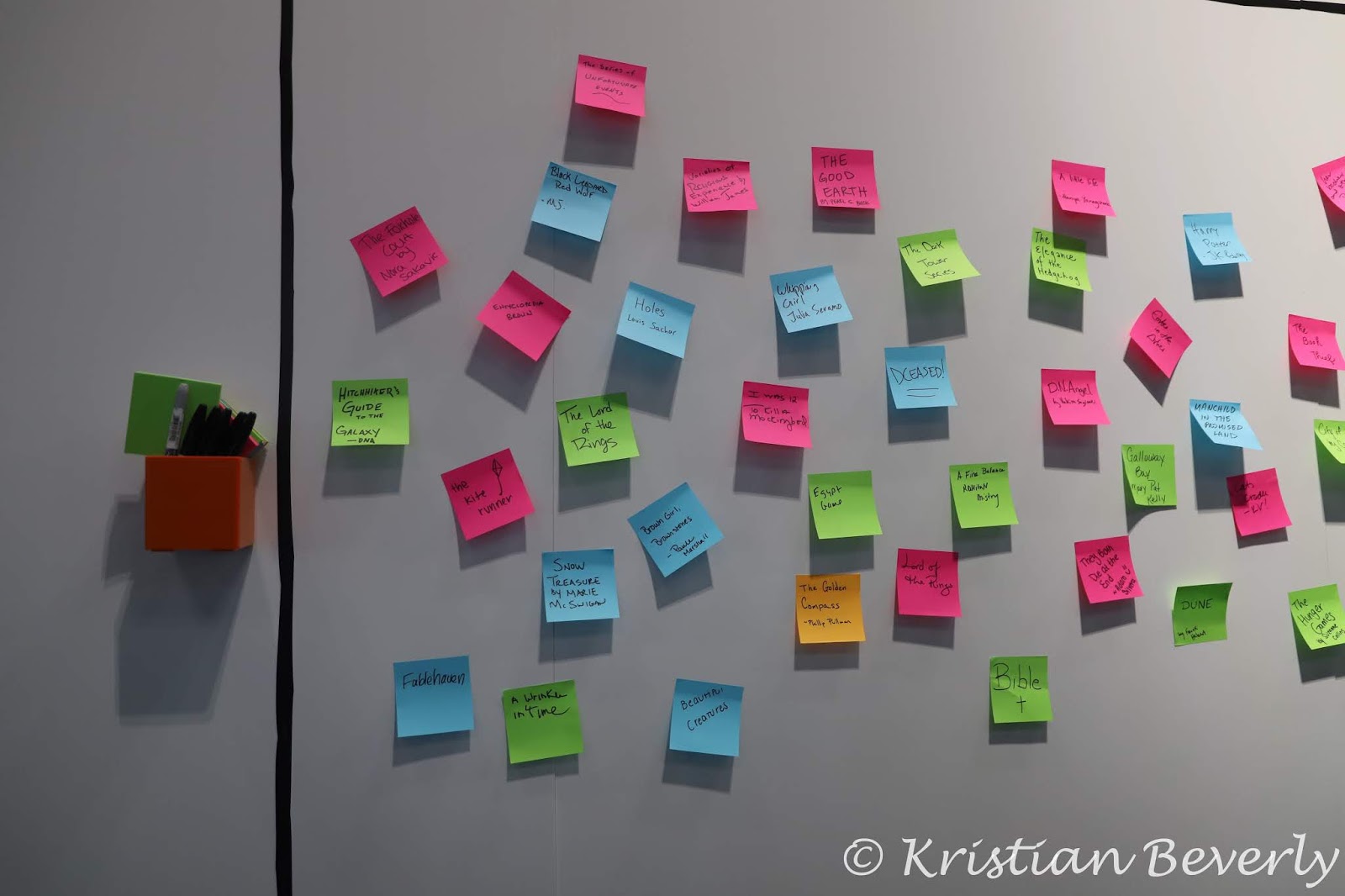
There was a wall devoted to books that shaped your life. 
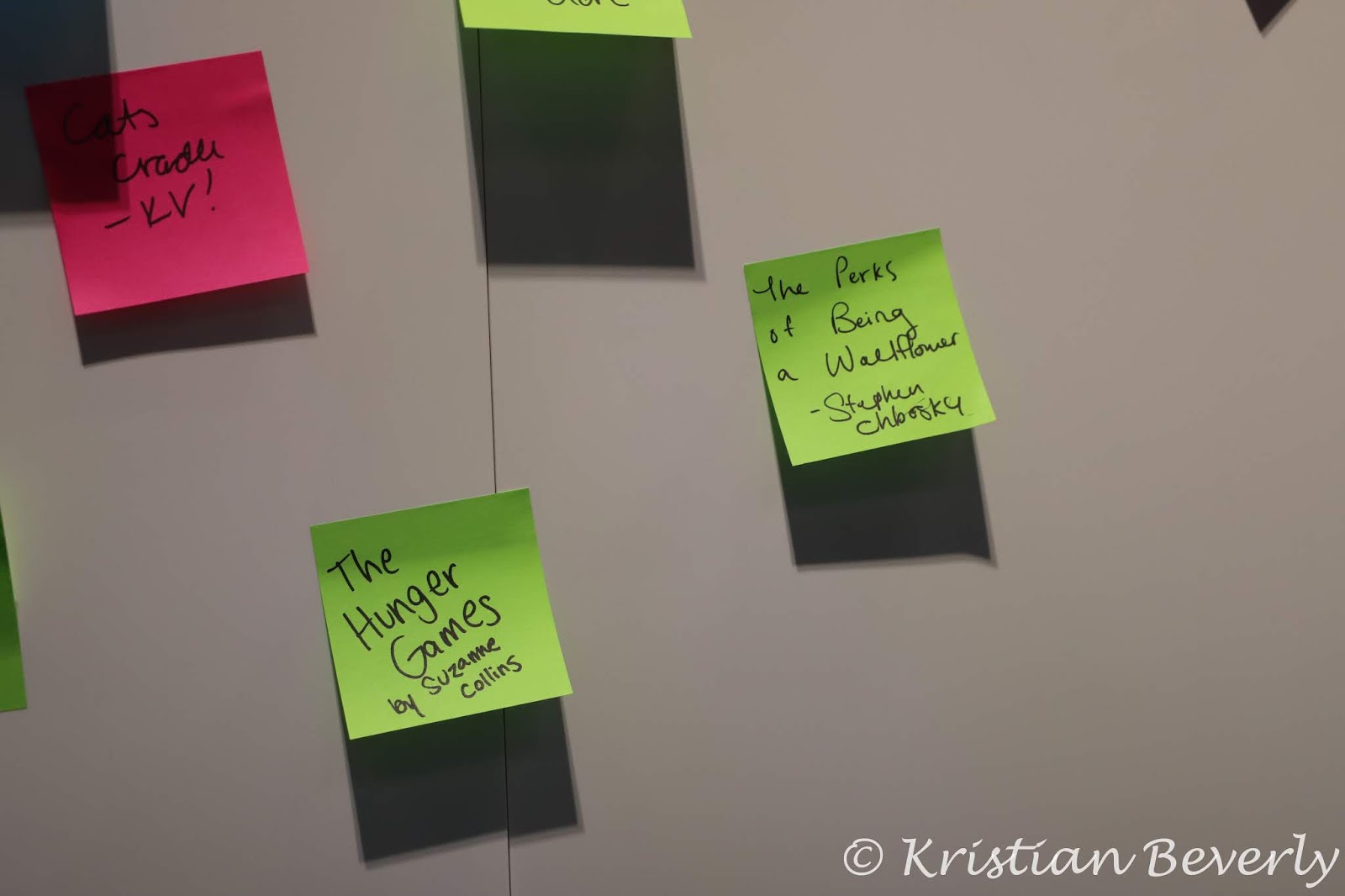
Close up. 
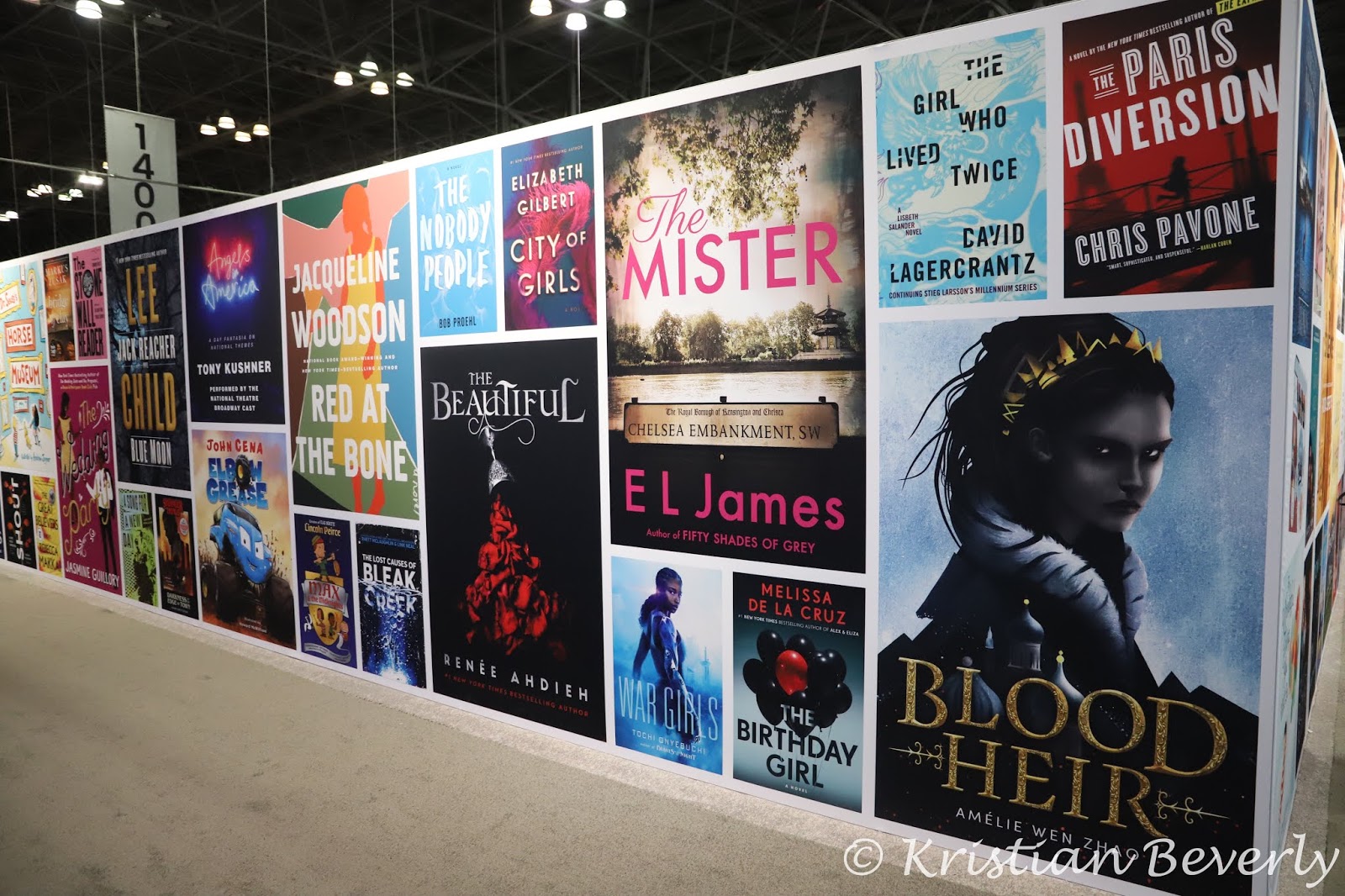
Publisher booths were decorated with covers of upcoming or bestselling titles. 

Another pretty wall. 
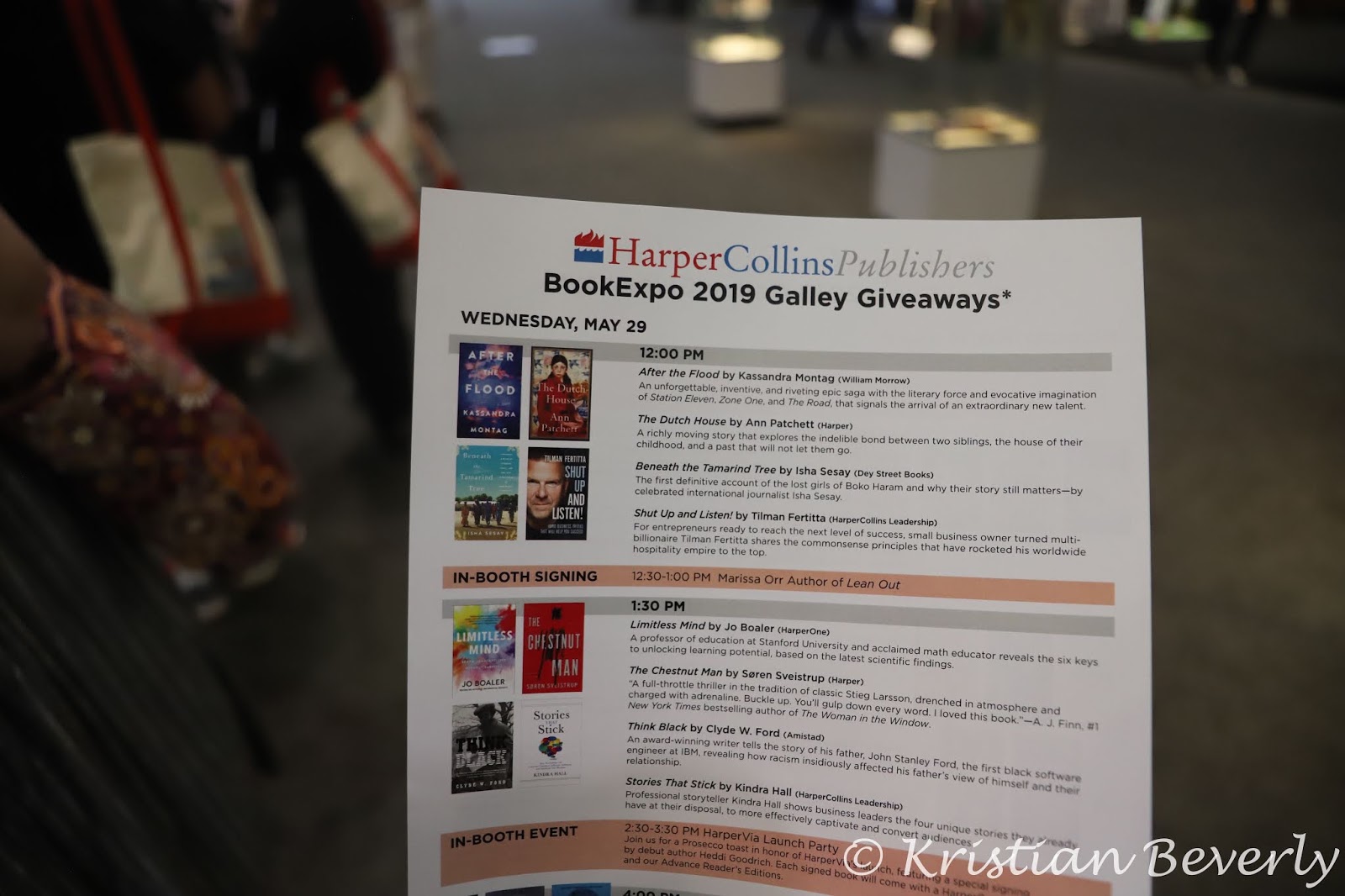
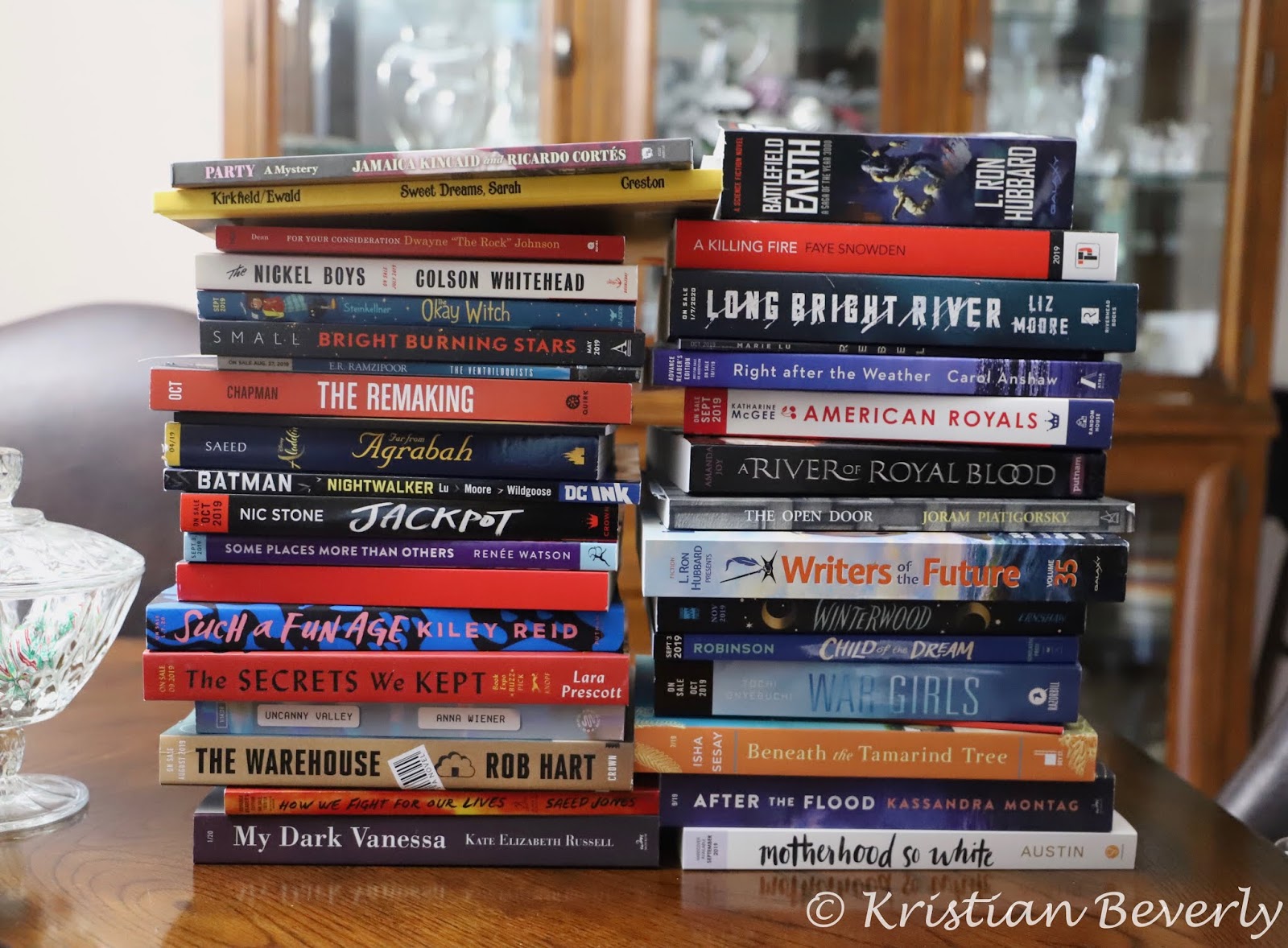
 Some publishers handed out sheets that told attendees the times and titles of books they’d be handing out. The bulk of the books handed out were advanced reader copies, or copies of books that are meant for promotion and aren’t to be sold.
At the end of the day my suitcase was full. I made it to the train station just before it began to pour.

It’d been a spectacular day filled with networking and listening to editors buzz about their choice books in the upcoming year. I’d totally do this again.

This is my final loot! I have a lot of great books to jump into reading.